Water Dispenser OEM & ODM
A water dispenser is bought on three numbers the buyer cannot see on the box: how fast it heats, how cold it actually gets, and how many units fit in a container. The fifteen models here split into four build types — bottled tabletop hot dispensers, compressor cooling-and-heating units, reverse osmosis purification dispensers and installation-free instant hot dispensers. This page sets out what separates them, which specification decisions move the unit cost, and what each filtration stage is actually for.
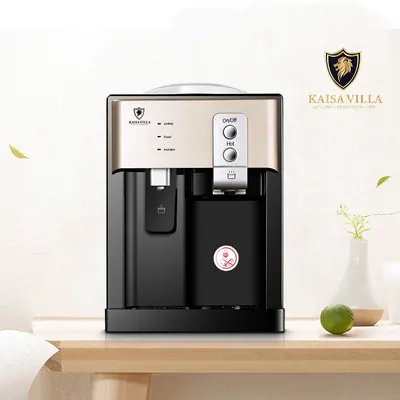
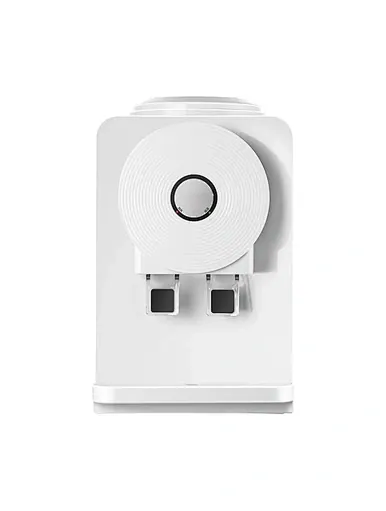
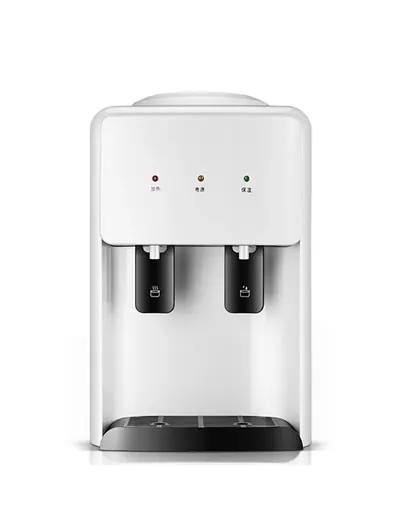
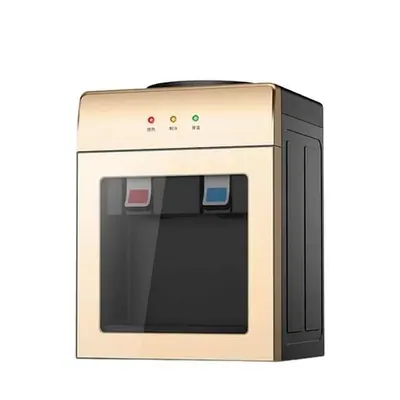
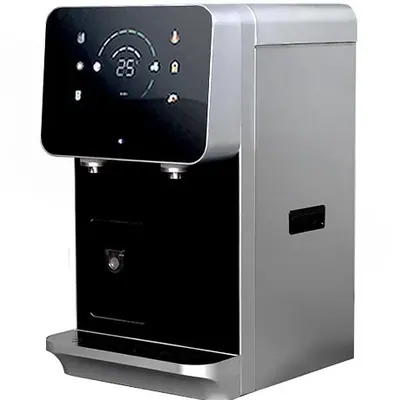
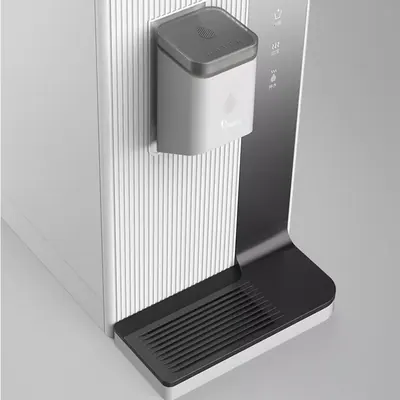
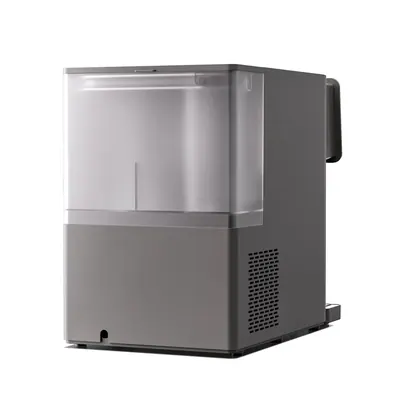
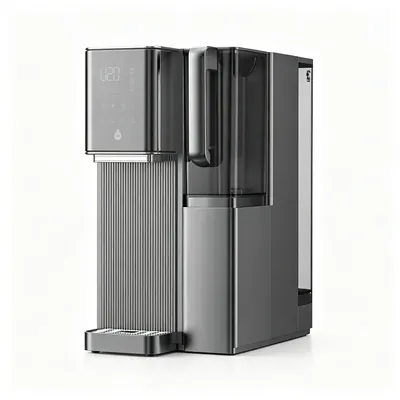
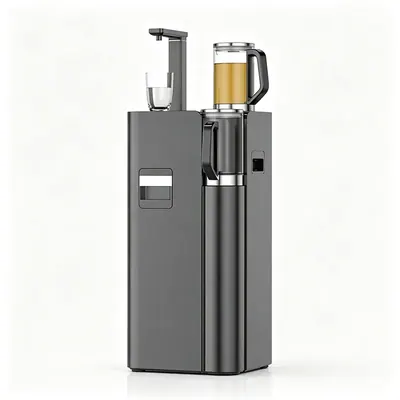
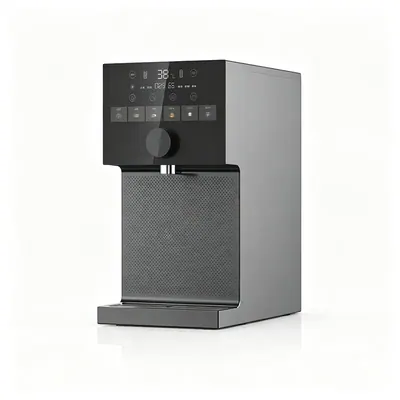
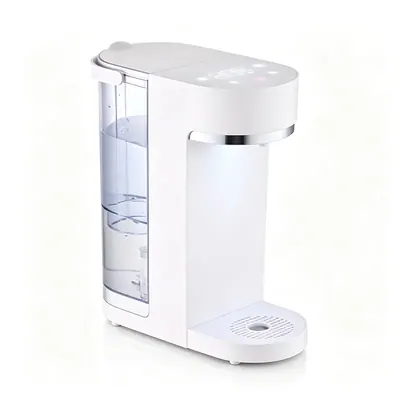
What the water dispenser range covers
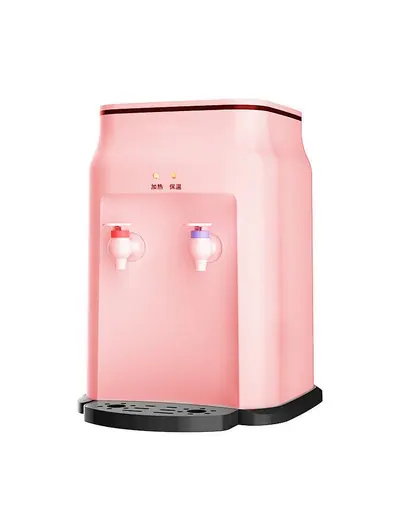
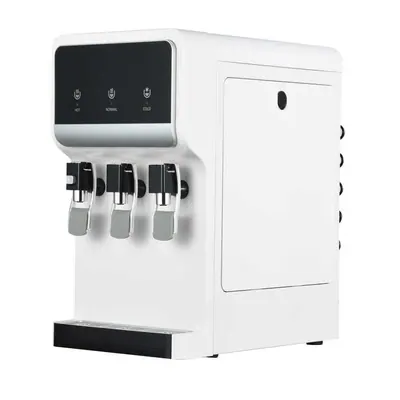
Fifteen models in four build types. Two of them are bottled tabletop dispensers that heat only; three are freestanding units that cool with a compressor and heat at the same time; six are purification dispensers with reverse osmosis built in; and three are installation-free instant hot units that heat a cup in seconds rather than a tank in minutes.
The four types are not variations on one product — they are different purchasing decisions. A bottled hot dispenser is a volume line with a low unit cost and a high minimum order. A compressor cooling unit is heavier, ships far fewer per container, and is chosen for how cold it gets and how long it holds that cold. An RO purifier dispenser is bought on filtration and on whether the market treats the water as drinkable at the tap.
Bottled tabletop dispensers, and why the liner decides the price
The ZX series (ZX-1D, ZX-2D, ZX-5D, ZX-6D, ZX-10D) heats at 500 W on 220 V / 50 Hz, reaches 90 degrees Celsius or above, and delivers at 5 liters per hour. Noise is held under 40 dB, which matters in an office or a bedroom more than in a kitchen. The liner is food-grade stainless steel rather than plastic — that single choice is the clearest step in unit cost on this type, and it is also the one buyers ask about first.
The five models are the same specification in five housings. That is deliberate: it lets a retail range carry one price point in five sizes and shapes without a second tooling program. Net weight runs from 1.3 kg to 2.3 kg, and a 40-foot high cube takes between 1,725 and 2,344 pieces depending on the housing — the container loading figure is on each model, and it is usually the number that decides which one a buyer orders.
Compressor cooling or electronic cooling
This is the decision that separates the two price classes, and it is visible in the specification rather than in the appearance.
| Compressor cooling | Electronic cooling | |
|---|---|---|
| Models | TS-33, TS-91-1, LS-91-1 | Desktop Water Purifier Dispenser (MY-SDRT-2320) |
| Cooling power | 90 W | 65 W |
| Cold water | 6 to 10 degrees Celsius at 3 to 6 liters per hour | 15 degrees Celsius or below at 0.5 liters per hour |
| Tanks | 304 stainless steel; 2.0 L cold plus 2.0 L hot plus 1.0 to 6.0 L normal | Combined with the purification block |
| Heating | 550 W, 85 to 95 degrees Celsius at 5 liters per hour | 1600 to 2150 W total, 15 liters per hour above 90 degrees |
| Net weight | 15 to 23 kg | 10 kg |
| Minimum order | 378 to 688 pieces | 500 pieces |
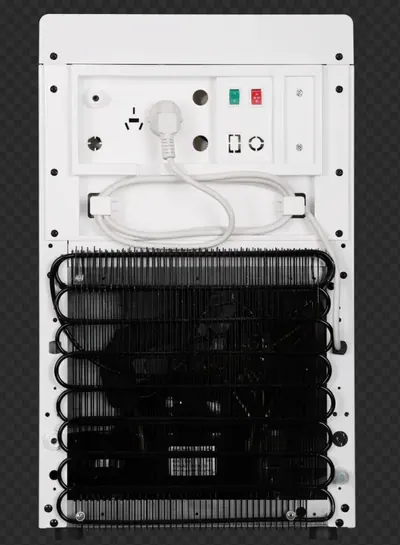
A compressor unit reaches genuinely cold water and holds it under load, which is why the three of them weigh between 15 kg and 23 kg and why a 40-foot high cube takes 378 to 688 pieces. Electronic cooling is lighter, cheaper and quieter, but it produces a fraction of the volume and it slows down as the ambient temperature rises. If the market is hot, or if the dispenser runs all day in an office, that difference is the whole product.
What each filtration stage is for
The purification models run a staged system rather than a single filter, and buyers who understand the stages specify the range differently from buyers who count them. A typical three-stage build on this range is a 5 micron PP sediment cartridge, a reverse osmosis membrane around 75 GPD, and a compressed carbon block with an iodine value around 1000 as the post filter. The sediment stage protects the membrane; the membrane does the actual dissolved-solids removal; the post carbon corrects taste and odour on the way out.
Two models add ultraviolet treatment on top of that — one at the spout and one flow-through stage on the cold tank. Ultraviolet does not filter anything; it addresses what grows in standing water, which is the reason it is fitted to the cold side rather than the hot side. Rated pure water output on these units is 3,000 to 4,000 liters with a flow of 0.13 to 0.26 liters per minute, so a dispenser fills a jug rather than a bucket.
One model in the range (KH-T3) also makes ice: seven bullet cubes on a single press, or continuous production on a long press, with a dedicated ice evaporator and a large ice bin. If the destination market drinks cold water with ice, that feature changes the product category the buyer is shopping in.
Installation-free and instant hot formats
The newest models in the range avoid plumbing entirely. They carry their own raw water tank, filter the water as it is drawn, and need nothing but a socket — which is what makes them sellable in rental housing, offices, and markets where a plumbed-in purifier is not serviced.
The instant hot units heat on demand rather than keeping a tank hot. One model delivers hot water in about 2.5 seconds from a 2.5 liter tank at 2200 W, with selectable temperatures at room, 45, 55, 65, 85 and 100 degrees, and cup volumes of 180, 230, 300 and 400 ml. Another pair run 110 to 220 V, produce 22 liters per hour above 90 degrees, and are rated for 3,000 to 4,000 liters of pure water. Skipping the standing hot tank is a real energy argument in a market that regulates standby consumption.
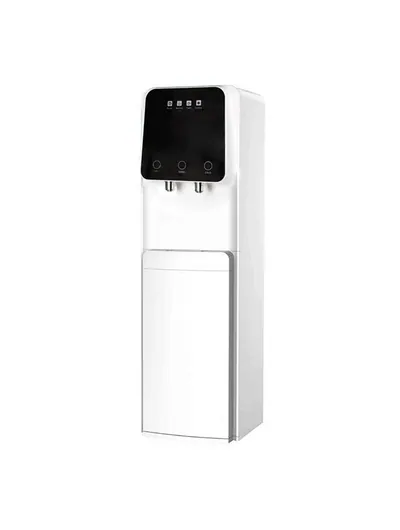
The upright model (MY-CB-2486) is the other end of the range: compressor cooling, a nine-cube ice evaporator, a large ice bin, dual-power heating, a 1.4 liter borosilicate glass jug on an automatically rotating spout, multi-stage filtration and both static and flow-through ultraviolet. It weighs 22 kg net and is the model buyers choose when they want the dispenser to be the kitchen appliance as well as the water source.
Minimum order, and why it ranges so widely
On this range the minimum order runs from 50 pieces to 1,000, and the spread is not arbitrary. The bottled hot dispensers are high-volume lines with a low unit cost, so they start at 1,000 pieces. The compressor cooling units sit at 378 to 688 because that is one container load and the tooling is already amortised. The purification and instant hot models sit at 500. The lowest figure in the range, 50 pieces, belongs to the RO dispenser with the ice function — the unit cost is high enough that a small first order is workable as a trial.
If you are testing a market before committing a container, say so. The first order and the repeat order do not have to be the same model.
Voltage, plug type and market build
Input range differs by model and it is written on each product page rather than assumed. The bottled dispensers are 220 V / 50 Hz. The compressor cooling units are 220 to 240 V at 50 to 60 Hz. Several of the purification and instant hot models accept 110 to 220 V at 50 to 60 Hz, which covers both a 120 V and a 230 V market from one build.
The plug and cord set are matched to the destination market, and where a market has its own approval route, testing and documentation are arranged for that market instead of being carried over from another one. We will tell you what documentation exists for a given model and what has to be arranged.
Private label branding on water dispensers
Branding on this range is mostly decided by housing material. An ABS housing takes a moulded logo, a printed panel or a coloured body without a new tool; a stainless or glass-fronted unit is more constrained, and the branding usually moves to the control panel, the tap and the packaging.
On the packaging side the choice is between a retail box built to survive e-commerce handling and a plain master carton for container volume. Artwork proofs are produced before tooling, a sample is shipped before bulk, and finished goods are photographed before shipment.
Water dispenser questions buyers ask
What is the difference between a water dispenser and a water purifier dispenser?
A dispenser only heats or cools water that is already drinkable, usually from a bottle. A purifier dispenser filters the water itself, normally through a staged system with a reverse osmosis membrane, so it can be connected to a mains supply. On this range the ZX and TS series are dispensers and the RO models are purifier dispensers.
Is compressor cooling worth the extra cost over electronic cooling?
It depends on the market and the duty cycle. A compressor unit cools to 6 to 10 degrees Celsius at 3 to 6 liters per hour and keeps that under continuous use, but it weighs 15 to 23 kg and only 378 to 688 units fit in a 40-foot high cube. Electronic cooling is lighter and cheaper but produces around 0.5 liters per hour of cold water. In a hot climate or an office that runs all day, the compressor version is usually the one that stays sold.
How many stages of filtration should I specify?
Three stages covers the normal requirement: a sediment cartridge to protect the membrane, a reverse osmosis membrane for dissolved solids, and a carbon block for taste. Adding ultraviolet on the cold side addresses what grows in standing water rather than what is dissolved in it. More stages are not automatically better; they are a different set of claims to service.
Can I order a small quantity to test the market first?
Yes. The minimum order on this range starts at 50 pieces for the RO dispenser with the ice function, and runs to 1,000 for the bottled hot dispensers. Tell us it is a market trial and we will quote the first order and the repeat order separately.
Can the dispenser be built for both 110 V and 220 V markets?
Some models can. Several of the purification and instant hot units accept 110 to 220 V at 50 to 60 Hz, which covers both from a single build. The bottled dispensers are 220 V / 50 Hz and the compressor cooling units are 220 to 240 V at 50 to 60 Hz, so those are market-specific. The input range is stated on each product page.
How many units fit in a container?
It varies more than buyers expect. A 40-foot high cube takes 1,725 to 2,344 pieces of the bottled hot dispensers depending on the housing, 688 of the TS-91-1, 560 of the TS-33, and 378 of the upright LS-91-1. The loading figure sits on every product page and it is usually the number that decides which model a buyer commits to.
If you tell us the destination market and the price you need to hit, we will point at the one or two models in this range that fit — rather than sending the whole list.
Need help choosing?
Send us the product type, target market and estimated volume — we will shortlist models and quote.