Sterilization OEM & ODM
6 models across 3 types — mosquito killer lamps, electric mosquito swatters and a fruit and vegetable purifier. This is the smallest and most mixed category on the site, and the reason it is worth reading before ordering is that the products in it are not interchangeable: UV, ozone and heat do different things, and only one of them can be used around people.
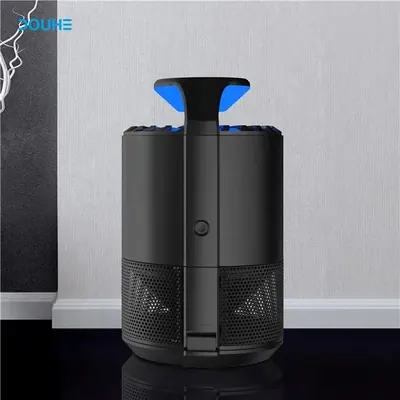
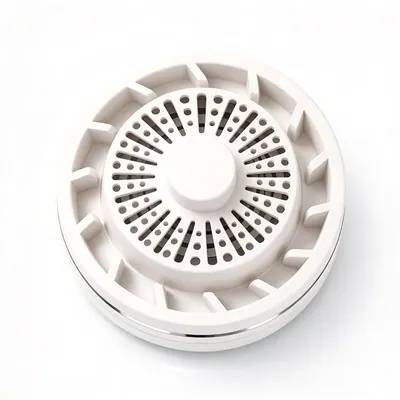
What is actually in this category
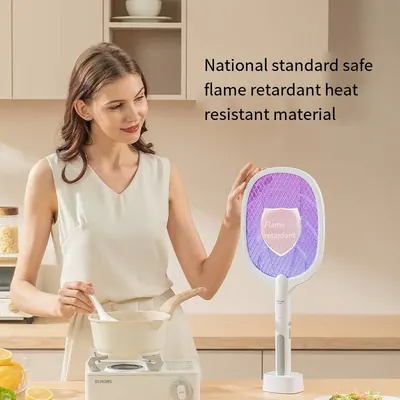
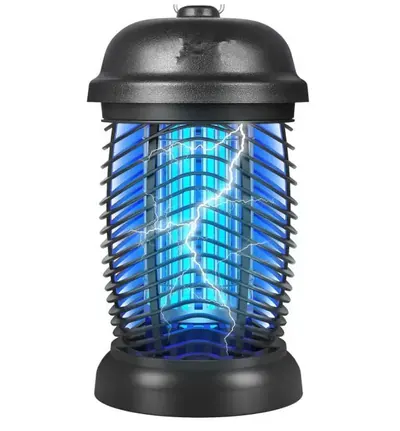
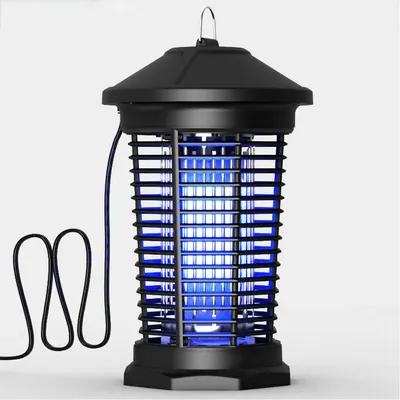
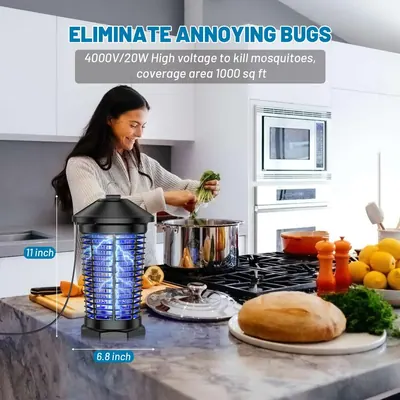
Two of the three groups are insect control: mosquito killer lamps that attract and kill, and hand-held electric swatters. The third is a purifier that treats fruit and vegetables before they are eaten.
The grouping is by function rather than by technology, and that is worth stating plainly because the technologies underneath are unrelated. An insect lamp usually relies on UV light to attract and a grid or a fan to kill. A produce purifier may use ozone, or a combination of ozone and ultrasound, or neither.
That matters because the safety case for each is different, and a buyer who assumes otherwise can specify the wrong product for a household with children or pets.
UV, ozone and heat are not the same thing
| Method | What it does | What it means for the buyer |
|---|---|---|
| UV light | Irradiates a surface or a volume; effectiveness depends on wavelength, intensity and exposure time | Works on what the light reaches. Shadowed areas are not treated, and the lamp's output falls over its life |
| Ozone | An oxidising gas that reaches into spaces light does not | Effective in enclosed volumes, and it is an irritant — the space has to be ventilated and the product must not be used around people or animals while it is running |
| Heat and steam | Raises the load above the temperature at which the target organisms survive | Easy to demonstrate and leaves no residue, but it needs time, water and a load that can take the heat |
| Attract-and-kill (insect lamps) | UV attracts the insect, a grid or fan kills it | A pest control product rather than a sterilizing one; effectiveness depends as much on placement as on the lamp |
If the destination market regulates biocidal or ozone-generating products, that is a question to settle before the order rather than after. Tell us the market and how the product will be presented.
Safety is the specification that decides the market
Ozone generators are regulated in several markets, and in some they may not be sold for use in occupied spaces. UV products have their own requirements around light leakage, lamp enclosure and warnings. Neither of these is a manufacturing detail; both decide where a product can be sold at all.
The practical consequence for a buyer is that the destination market has to be stated at brief stage. A produce purifier that is acceptable in one country may not be in another, and the difference is not in the product's performance but in whether the method is permitted and how it has to be labeled.
We do not decide which route applies. What we can say, for the model you are considering and the market you are selling into, is what we know has been required before — so the question is asked early, when it is cheap to change the answer.
Insect control is a placement problem more than a product problem
Mosquito lamps sell well and get returned often, and the reason is usually not the product. Attract-and-kill lamps work by drawing insects toward a light source, which means they work best when placed away from the people they are protecting and near where the insects are coming from. A lamp placed on a bedside table is competing with a human being for the insect's attention, and it loses.
This is worth knowing commercially because it changes what belongs in the instruction manual and on the packaging. A product that tells the buyer where to put it produces fewer returns than the same product sold on appearance alone, and a swatter with a clear instruction panel on the box is easier to sell in a general retail channel than one with a photograph and no guidance.
It also affects packaging size. These products are usually low-price impulse purchases, and they compete for shelf and pegboard space with everything else at that price point.
Voltage, plug type and compliance by market
We do not pre-certify every SKU, and in this category the compliance position is set by the method as much as by the electrics. Testing and certification are arranged for the specific model and the specific market you are ordering for, and quoted as their own line.
| Market | Voltage and plug | What is usually required |
|---|---|---|
| European Union | 220–240V, CEE 7/7 (Schuko) | CE marking with test reports behind it, and for ozone-generating products the additional assessment that method attracts in the destination country |
| United Kingdom | 230V, BS 1363 (Type G) | UKCA marking with the test reports, with the same additional assessment for ozone products |
| North America | 110–120V, NEMA 1-15 or 5-15 | Listings that retailers accept, and confirmation of what the product may claim given the method it uses |
| Australia and New Zealand | 230–240V, AS/NZS 3112 (Type I) | Electrical safety approval, with the same method-specific position |
| Middle East and Southeast Asia | 220–240V, plug type varies by country | Depends on the destination; conformity documents are frequently required at customs |
How an order runs, and what to send first
The same sequence runs on every order. In this category the brief carries more weight than usual, because the market and the method both have to be known before a model can be recommended.
- Brief — you send the function, the destination market, how the product will be presented to the customer, and your estimated volume.
- Shortlist and assessment — we tell you which models fit, and where the method changes what can be sold in your market.
- Quotation — pricing, minimum order quantity, lead time and carton data for the specific model.
- Artwork proof — logo, packaging and the warning text required in your market are proofed for your approval.
- Sample — a production sample is produced and shipped before bulk production.
- Bulk production — production runs to the approved sample.
- Pre-shipment — finished goods are photographed and inspected before dispatch.
- Shipping — sea or air, FOB or CIF as agreed.
Questions buyers ask
Is ozone safe to use in a home?
Ozone is an irritant, and the space has to be ventilated. In several markets ozone-generating products are restricted or may not be sold for use in occupied spaces. That is a question for the destination market rather than for the factory, and we will tell you what we know has been required before for the market you name.
Which is more effective, UV or ozone?
They do different things. UV works on what the light reaches and is limited by shadowing; ozone reaches into spaces light does not. Neither is universally better, and the right choice depends on what is being treated and whether the space can be cleared while the product runs.
Why do mosquito lamps get returned?
Usually because of placement rather than the product. An attract-and-kill lamp works best away from people and near where insects enter. A product whose packaging and manual explain that will be returned less often than one sold on appearance alone.
What is the minimum order for a product in this category?
It is quoted per model, because it depends on the model and on how much of it is already tooled. Both the minimum order quantity and the lead time are stated on the quotation for the specific model you pick.
Do these products come with certification?
We do not claim blanket certification across the catalog, and in this category the position depends on the method the product uses as well as on the electrics. Certification is arranged for the specific model and the specific market you are ordering for, and quoted as its own line.
Can we see a sample before ordering in bulk?
Yes. A production sample is produced and shipped before bulk production, so the function, the noise where relevant and the packaging can all be checked before the order is placed.
This is the smallest category on the site. If the product you need is not listed, send the specification — the range here is drawn from the Cixi supply chain and it is not exhaustive.
Need help choosing?
Send us the product type, target market and estimated volume — we will shortlist models and quote.