Sandwich Maker OEM & ODM
21 sandwich maker and toasted sandwich grill models, with fixed and interchangeable plates, in two-slice and four-slice formats. The plate coating decides how long the product is used, and the plate mechanism decides whether one appliance can cover sandwiches, waffles and a grill — which is what most buyers ask for and what most cheap models do not deliver.
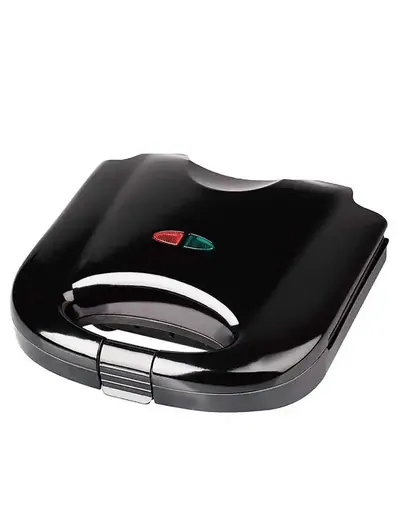
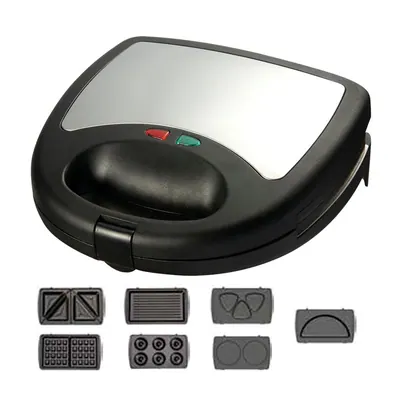
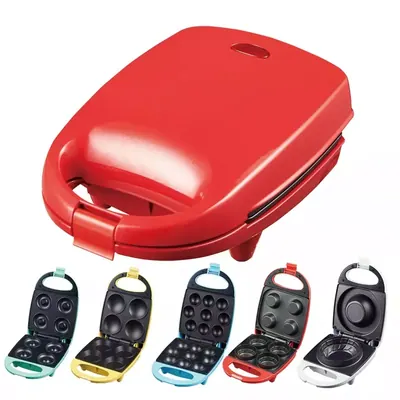
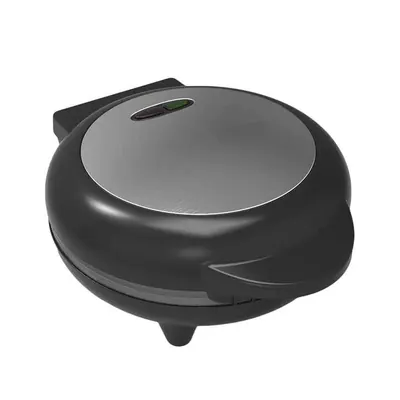
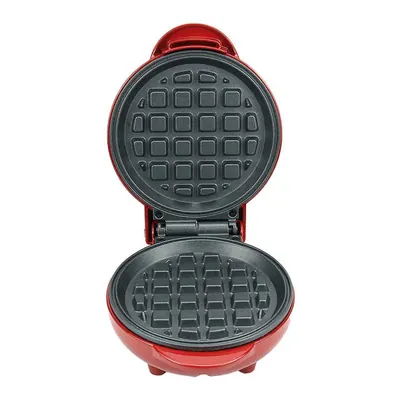
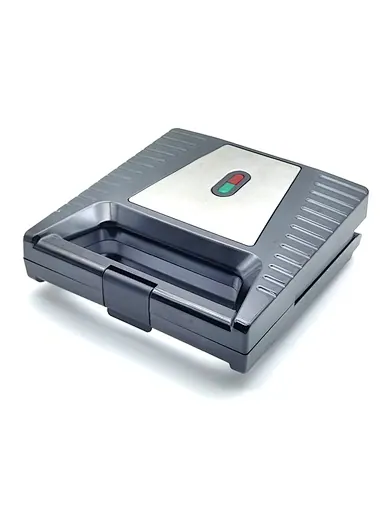
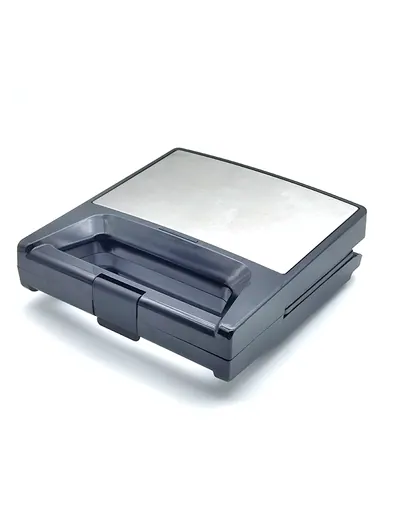
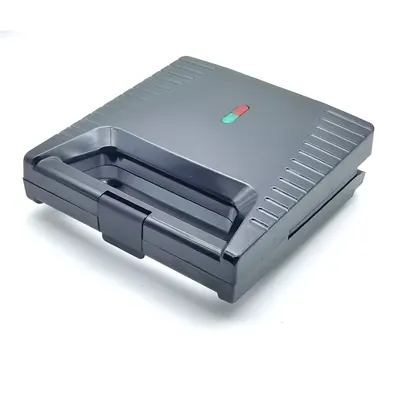
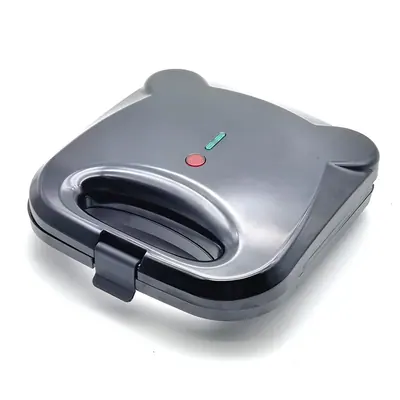


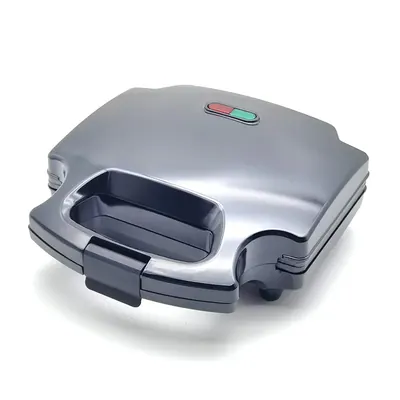
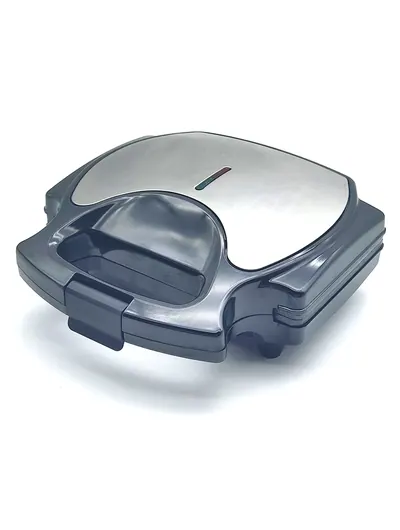
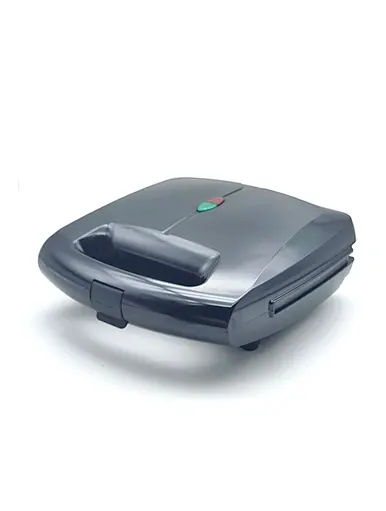
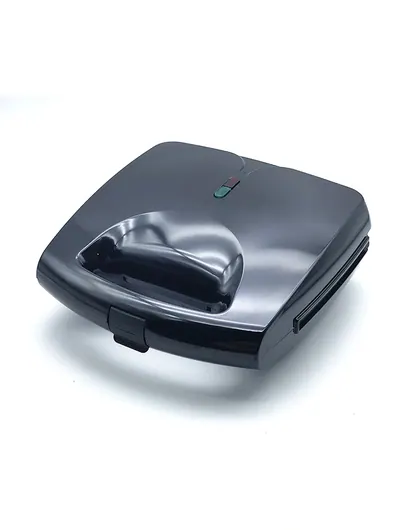
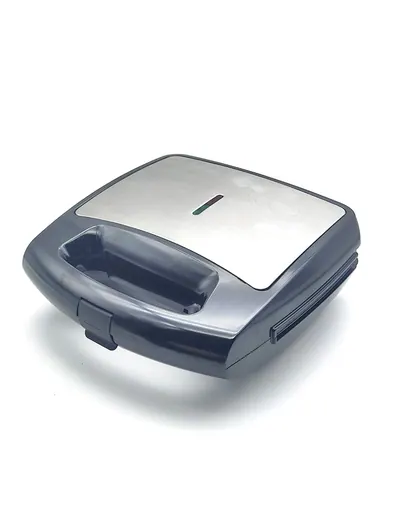
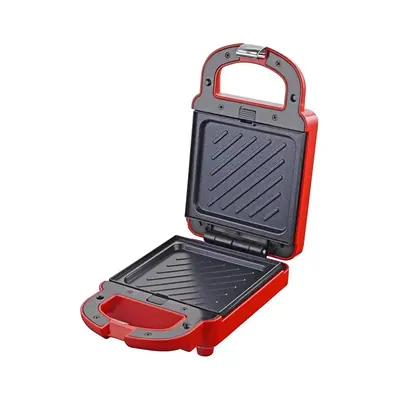
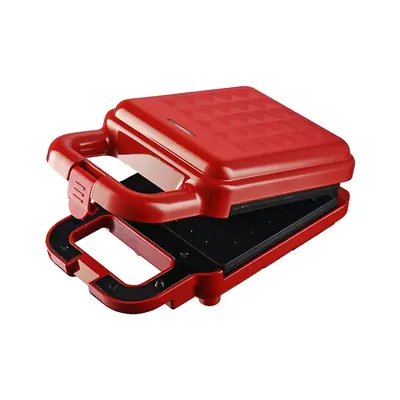
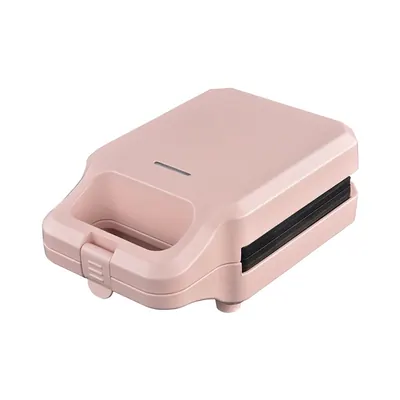

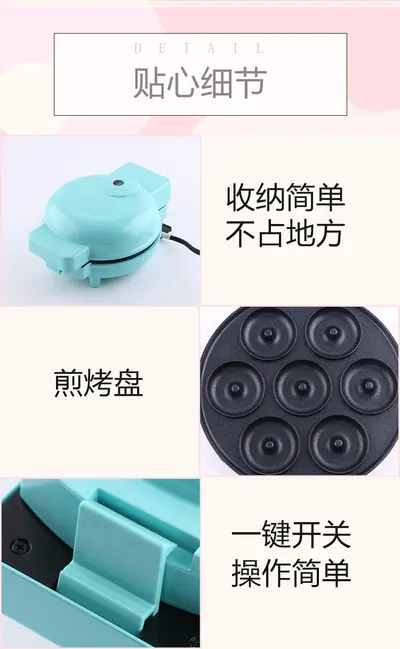
Fixed plates or interchangeable plates
A fixed-plate sandwich maker does one thing and does it at the lowest cost. An interchangeable-plate model ships with a set of plates — sandwich, waffle, grill — that clip in and out, so one appliance covers several functions and the customer stores one body rather than three.
The commercial attraction is obvious, and so is the engineering problem. The plate mechanism is the part that fails: a clip that loosens, a plate that does not seat flat so the sandwich cooks unevenly, or a release that is too stiff to use when the plates are hot. A well-designed mechanism costs more than a fixed plate and is worth it, because a badly designed one generates returns that a fixed plate never would.
Where interchangeable plates are fitted, the seating and the latch are worth confirming on a sample while the plates are hot, which is when the customer will be handling them.
The plate coating is the durability story
A sandwich maker fails in use before it fails electrically. The non-stick coating wears, the sandwich begins to stick, the coating lifts at a corner and the appliance is retired with the element still working.
The substrate matters as much as the coating. A coating applied to an uneven or poorly prepared plate surface lifts early regardless of its quality, and the plate has to tolerate being heated and cooled repeatedly and being washed between uses. Whether the plates can go in a dishwasher is part of the same decision, because hot washing is what accelerates the failure in normal use.
If the product is to be marketed on easy cleaning, that has to be designed in rather than claimed. A plate that releases a toasted sandwich without oil and washes clean is a material and process decision made at tooling.
Specification decisions that move the unit cost
| Decision | What it changes | Why it moves the price |
|---|---|---|
| Plate type | Fixed, interchangeable, or a flat grill and sandwich combination | Interchangeable plates add a set of mouldings, a latch and a release, and they multiply the parts in the carton |
| Plate coating | Non-stick quality, substrate preparation, and whether the plates are dishwasher-safe | The coating is what retires the product in most cases, and it is where a cheap model becomes expensive for the customer |
| Plate size and count | Two-slice, four-slice, or a single large plate | More plate area means a larger element and a larger housing, and it changes the carton volume more than the price |
| Hinge | Fixed, floating, or a 180-degree opening hinge | A floating hinge takes thicker fillings without squeezing them out, and a 180-degree hinge turns the unit into a grill |
| Element and thermostat | Element power, and whether there is a thermostat or only a thermal cut-out | A thermostat holds the plate temperature as the sandwich loads; a cut-out only prevents overheating |
| Indicator and controls | Ready light, temperature control, or a timer | Electronics and tooling for the panel, and a ready light is one of the features buyers compare on |
| Standing and storage | Whether the unit stands vertically for storage | A vertical stand is a small moulding change and a frequent purchase consideration in small kitchens |
The floating hinge, and why fillings fall out
The most common complaint about a sandwich maker is that the filling is squeezed out of the sides. That is usually the hinge rather than the plate.
A fixed hinge closes to a preset gap. A thick sandwich is compressed until the filling escapes, and a thin one is not pressed at all. A floating hinge allows the top plate to sit level at whatever thickness the sandwich is, which keeps the filling in and cooks both sides evenly.
It is a modest change to the mechanism and a significant change to the customer's experience. For a product aimed at anything other than the cheapest end of the market it is worth specifying, and it is worth checking on a sample with a realistically filled sandwich rather than an empty one.
Voltage, plug type and compliance by market
We do not pre-certify every SKU. Testing and certification are arranged for the specific model and the specific market you are ordering for, and quoted as their own line, together with food-contact material documentation for the plates.
| Market | Voltage and plug | What is usually required |
|---|---|---|
| European Union | 220–240V, CEE 7/7 (Schuko) | CE marking with test reports behind it, plus food-contact material documentation for the plates |
| United Kingdom | 230V, BS 1363 (Type G) | UKCA marking with the test reports and the same material documentation |
| North America | 110–120V, NEMA 1-15 or 5-15 | Listings that retailers and marketplaces accept before the product can be sold |
| Australia and New Zealand | 230–240V, AS/NZS 3112 (Type I) | Electrical safety approval and food-contact material documentation |
| Middle East and Southeast Asia | 220–240V, plug type varies by country | Depends on the destination; conformity documents are frequently required at customs |
Branding, packaging and the recipe booklet
The lid is the surface seen most when the appliance is closed and in use, which makes it the natural place for the logo. Pad printing and silk screen suit plastic, and the lid is also where a color accent or a printed pattern reads best.
The recipe booklet is a small inclusion with a disproportionate effect in this category. A customer who is told what to put in the sandwich maker uses it more often and keeps it longer, and the booklet is also where the interchangeable plates are explained. It costs very little and it is frequently the difference between a product that is used weekly and one that goes into a cupboard.
Packaging follows the channel: a color box with a photographic front for retail, a plain carton for marketplace shipping. The artwork proof is free.
Sandwich maker questions buyers ask
Fixed plates or interchangeable plates?
Fixed plates are cheaper and do one thing well. Interchangeable plates let one appliance cover sandwiches, waffles and a grill, which is what most buyers ask for, at the cost of a mechanism that has to be well designed. A weak latch on an interchangeable model generates returns a fixed plate never would.
What makes a sandwich maker stop working well?
The plate coating, in most cases. The element usually outlasts the non-stick surface, and how long that takes depends on the coating, the substrate it is applied to, and whether the customer puts the plates in a dishwasher.
Why does the filling squeeze out?
Usually the hinge rather than the plates. A fixed hinge closes to a preset gap, so a thick sandwich is compressed until the filling escapes. A floating hinge sits level at whatever thickness the sandwich is. It is worth checking on a sample with a realistically filled sandwich.
What is the minimum order for a sandwich maker?
It is quoted per model, because it depends on the model and on how much of it is already tooled. Both the minimum order quantity and the lead time are stated on the quotation for the specific model you pick.
Do the sandwich makers come with certification?
We do not claim blanket certification across the catalog. Electrical certification and the food-contact material documentation for the plates are arranged for the specific model and the specific market you are ordering for, and quoted as their own line.
Can we see a sample before ordering in bulk?
Yes. A production sample is produced and shipped before bulk production, and for this category we recommend cooking in it rather than only inspecting it, because evenness and release are what the customer will judge.
If the sandwich maker you need is not in this list, send the specification — plate type, size, hinge and controls — and we will tell you what is available.
Need help choosing?
Send us the product type, target market and estimated volume — we will shortlist models and quote.