Pet Water Fountain OEM & ODM
A pet fountain is sold on capacity and on the idea that running water encourages drinking. The two things that decide whether it works are the pump's noise and how easy the whole thing is to clean, because a fountain that is hard to clean gets cleaned less often than it should.
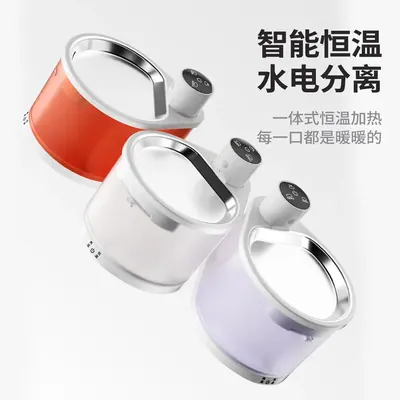
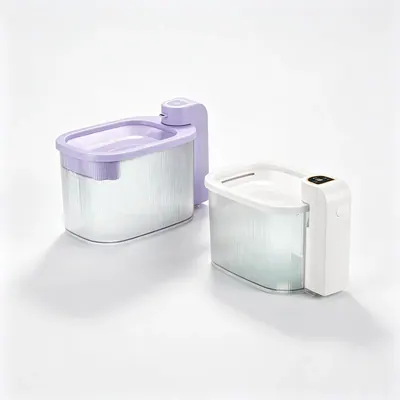
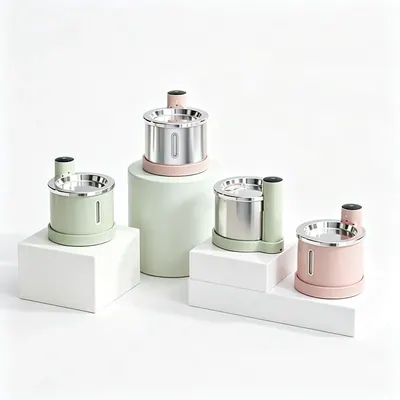
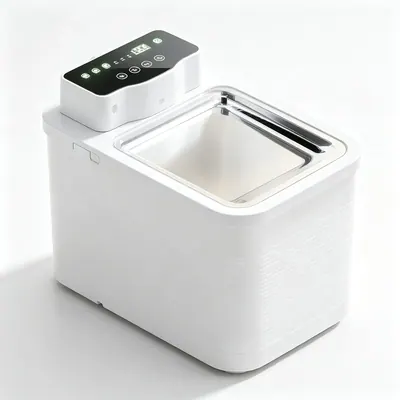
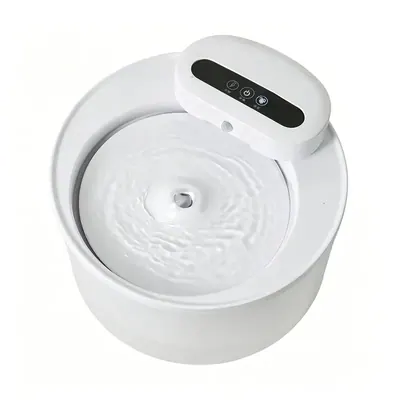
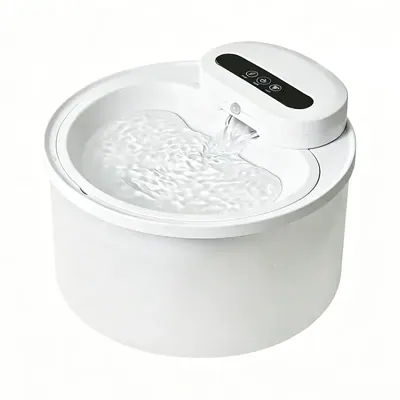
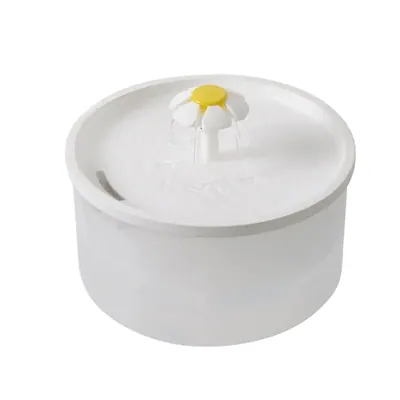
Noise is the specification that decides where it lives
A fountain runs continuously, so noise is not a feature — it is the reason the product is moved to another room. The pump is the main source: a magnetically driven pump with a ceramic shaft is quiet, a cheap impeller pump with a metal shaft is not.
Water noise is the second source and can be designed: a spout that pours smoothly is quieter than one that splashes, and a reservoir that is nearly full is quieter than one that is nearly empty. The float or the low-water cut-off matters for that reason too.
Filtration: foam, carbon, and what each one does
A fountain filter normally has two stages: a foam layer that traps hair and debris, and activated carbon that adsorbs odours and some organics. The foam is what keeps the pump alive; the carbon is what keeps the water tasting acceptable.
Carbon mass matters, as it does in air purifiers. A thin pad lasts a couple of weeks; a proper carbon compartment lasts a month or more. And a filter that is hard to change is a filter that is not changed.
| Part | Function | Replacement interval | Failure if neglected |
|---|---|---|---|
| Foam pre-filter | Traps hair and debris | 2–4 weeks | Pump jams and burns out |
| Carbon layer | Adsorbs odour and organics | 3–4 weeks | Water smells, cat stops drinking |
| Pump | Circulates water | — | Noise, then failure |
| Reservoir and bowl | Holds water | Wash weekly | Biofilm, slime on surfaces |
Material and the slime problem
Warm, aerated water grows biofilm quickly, and a plastic bowl with scratches gives it somewhere to hold. BPA-free polypropylene and stainless are both used; stainless resists biofilm better and is easier to sanitise, at a cost.
The design answer is fewer seams and a bowl that can go in a dishwasher. A fountain with a decorative shape that cannot be reached with a brush will develop a film in the corners, and the customer blames the filter.
Pump protection and low-water behavior
A pump running dry overheats within minutes. A low-water cut-off, or a design where the pump intake is above the minimum usable level, protects it — but the second approach means the pump is audible from the moment the level drops.
The practical combination is a low-water indicator plus a pump rated for intermittent dry running, so a forgetful owner does not destroy the product. Both are cheap compared with a replacement pump.
Market configuration and notes
| Market | Power | Plug | What changes |
|---|---|---|---|
| North America | 110–120 V | A / B | Larger capacity expected; UL-style marking |
| EU / UK | 220–240 V | C / F, G | WEEE, low-voltage directive if a mains adapter is supplied |
| Japan | 100 V | A | Re-rated pump; smaller units common |
| SE Asia / Middle East | 220–240 V | C / G | Heat and hard water; stainless bowl preferred |
Pet fountain questions buyers ask
Why does my fountain get noisy?
The water level dropped, or the pump has hair in it, or the impeller shaft has worn. A low-water indicator and a foam pre-filter between the water and the pump remove most of it.
How often should the filter be changed?
Every three to four weeks for the carbon, and every two to four weeks for the foam depending on how many animals use it. A filter that is awkward to change is a filter that gets skipped.
Does a fountain make a cat drink more?
Many cats prefer running water, so it often does — which is the point for urinary health. But the effect depends on the fountain being kept clean, and a slimy fountain has the opposite result.
What should be measured on a sample?
Noise at one meter with a full and a half-full reservoir, flow rate, and the time to disassemble and clean every water-contact part. That last number predicts long-term use.
Tell us the animal size, the reservoir capacity and whether the bowl must be stainless, and we will quote the pump and the filter as separate lines.
Need help choosing?
Send us the product type, target market and estimated volume — we will shortlist models and quote.