Milk Frother OEM & ODM
A milk frother is judged on foam, and foam is a temperature problem before it is a whisk problem. Milk proteins hold foam in a narrow band, and a unit that overshoots that band produces foam that collapses in the cup — which is the most common complaint in the category.
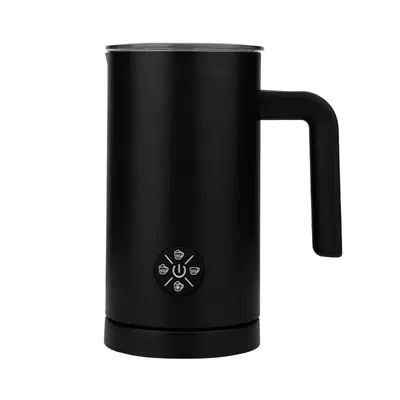
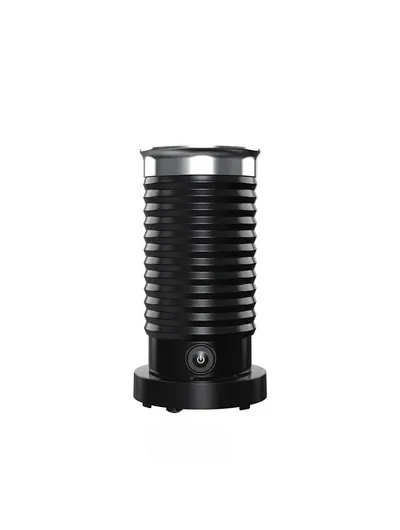
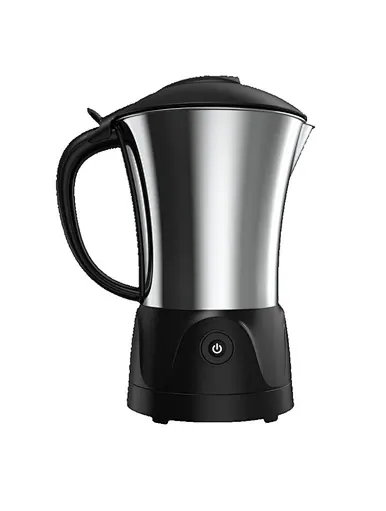
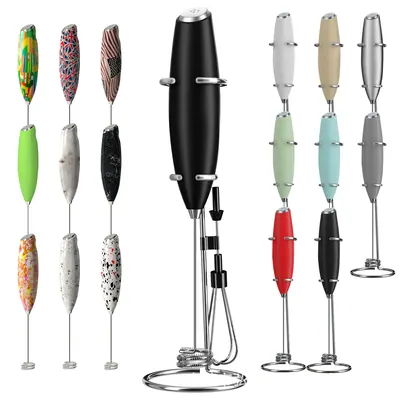
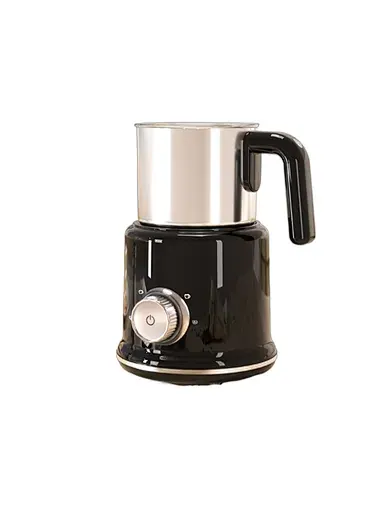
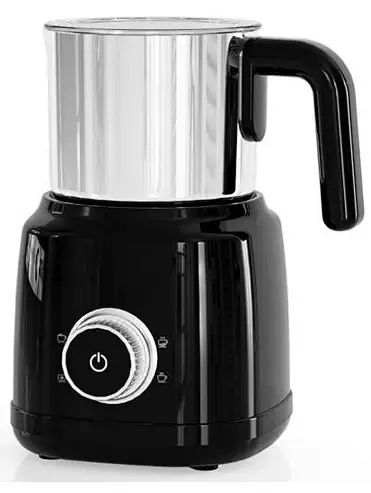
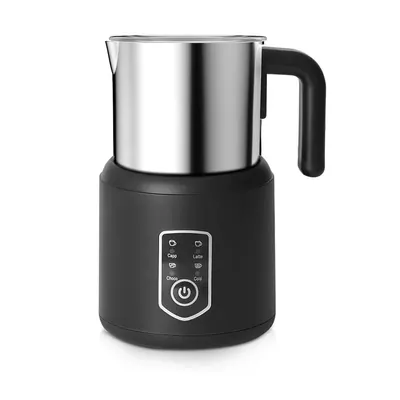
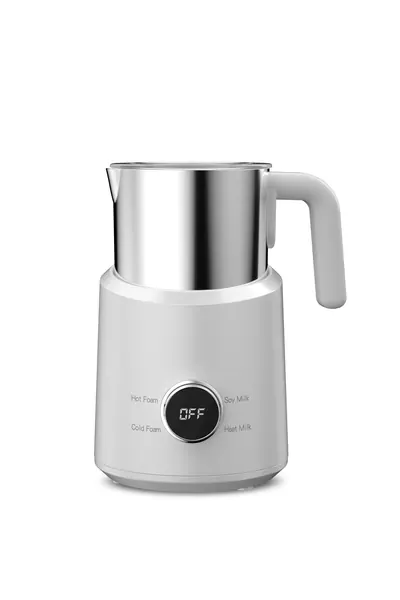
The target temperature is 60–65 °C, and overshooting is the usual failure
Milk foams best between roughly 60 and 65 °C. Above about 70 °C the whey proteins denature and the foam structure collapses, so the customer gets hot milk with a thin layer of bubbles on top. A unit that heats fast and relies on a fixed timer will overshoot on a small volume and undershoot on a large one.
The control that fixes this is a temperature sensor in contact with the jug, not a timer. The cost difference between a timer board and an NTC-controlled board is small, and the difference in the review is not: a frother that produces stable foam at every fill level is a repeat purchase; one that works only at the fill level the factory tested is a return.
Induction heating versus a base element
Most jug-style frothers heat by induction: the base creates a field and the jug's magnetic base plate gets hot, so the jug has no electrical contacts and can be rinsed under a tap. That is a genuine safety and usability advantage, and it is why the format dominates.
The alternative is a heating element in the base with a contact ring, which is cheaper and lets the jug be lighter, but the contacts are a wear and a cleaning problem. For a retail product, the induction jug is usually worth the cost; for a promotional product, the element version is often the only way to hit the price.
| Decision | What it changes | Why it matters to the customer |
|---|---|---|
| Heating method | Induction jug or contact base | Induction jug can be washed; contacts corrode |
| Temperature control | Timer or NTC sensor | Sensor holds 60–65 °C at any fill level |
| Whisk geometry | Coil spring or paddle | Spring makes denser foam; paddle is easier to clean |
| Capacity | Minimum and maximum fill | Below the minimum the whisk does not reach; above it overflows |
| Coating | Non-stick interior | Uncoated steel scorches milk at the base |
Minimum fill is a real constraint, not a footnote
A frother's whisk sits a fixed distance above the base, so below a certain volume it cannot reach the milk. That minimum is typically 60 to 100 ml, and it is printed in the manual and ignored by customers who want a small froth for one drink.
The design answer is a whisk that sits lower, or a jug profile that concentrates a small volume around the whisk. Both are geometry decisions taken at tooling, and both are cheaper than the support cost of a product that does not work at the volume people actually use.
Cleaning is the second most common complaint
Milk residue dries hard and smells, so a frother that cannot be cleaned quickly gets used twice and then lives in a cupboard. The parts of the design that decide this are the jug's interior radius, whether the whisk detaches without tools, and whether the lid seals well enough to be rinsed.
A non-stick interior coating helps, but it is not the main factor. A jug with a rounded interior corner and a whisk that lifts out with a magnet or a simple clip is easier to clean than a coated jug with a pressed corner and a fixed whisk.
Market configuration at a glance
| Market | Voltage | Plug | What changes in the specification |
|---|---|---|---|
| EU | 220–240 V | C / F | Food-contact declaration, WEEE registration, standby limit if there is a keep-warm |
| UK | 220–240 V | G | Same plus the fused plug |
| North America | 110–120 V | A / B | Higher current, longer heat-up at the same wattage, UL-style marking |
| Japan | 100 V | A | Re-rated element; heat-up time increases noticeably |
| Australia / NZ | 230–240 V | I | Insulated pins, food-contact labeling |
Milk frother questions buyers ask
Why does the foam collapse after a minute?
Almost always because the milk went past 70 °C. Above that the whey proteins denature and the foam structure fails. A sensor-based control holding 60–65 °C fixes it; a timer-based control cannot, because the time depends on the volume.
Cold froth or hot froth — can one unit do both?
Yes, with a switch that runs the whisk without the heater. Cold froth is used for iced drinks and it is a cheap feature to add, since the heater is simply not energised.
Does the jug have to be induction?
No, but it is the better product. An induction jug has no electrical contacts to clean or corrode and can be rinsed under a tap, which is what most customers actually do with it.
What should be measured on a sample?
Final milk temperature at three fill levels, foam height immediately after and two minutes after, and the time to reach temperature. Those three tests predict most of what a reviewer will say.
Send the capacity you want to support, whether the jug must be induction, and the market, and we will quote the jug tooling and the control board separately so the price difference is visible.
Need help choosing?
Send us the product type, target market and estimated volume — we will shortlist models and quote.