Massage Gun OEM & ODM
36 percussion massage gun models, from compact handheld units to higher-torque guns for professional use. Two specifications decide whether a gun feels effective or merely fast — stroke length and stall force — and neither is the number most listings put first.
Massage Gun OEM & ODM: models, specifications and MOQ
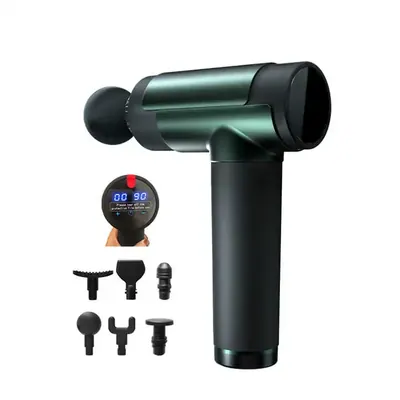
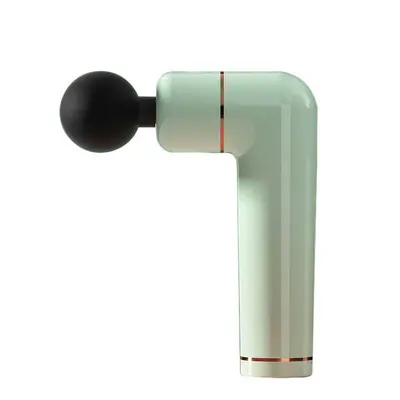
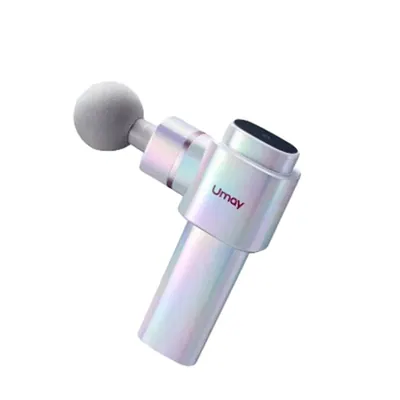
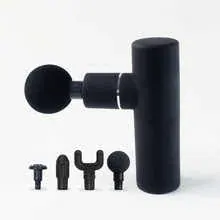
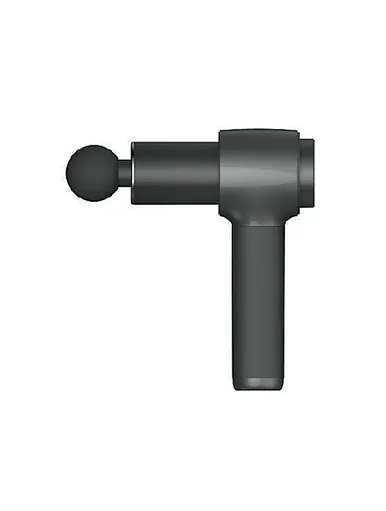
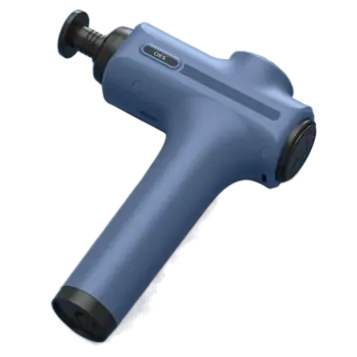
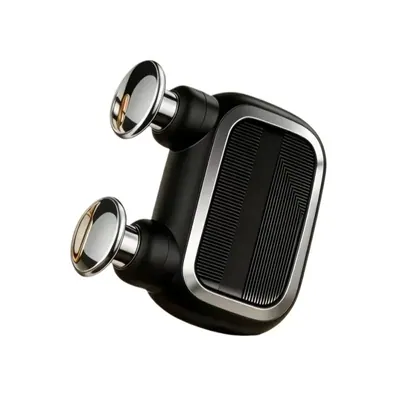
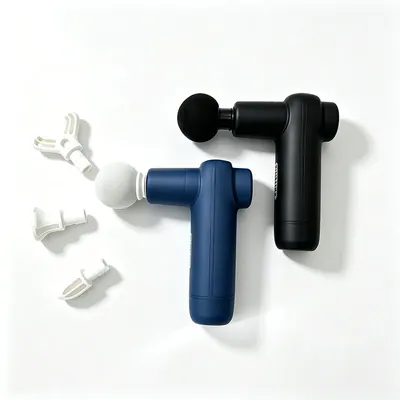
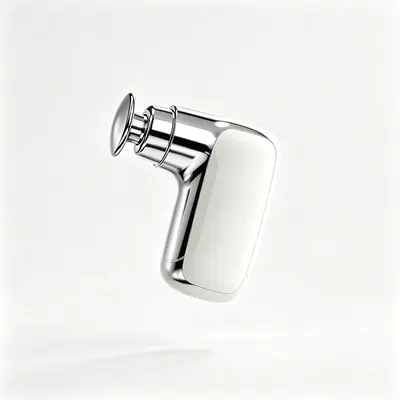
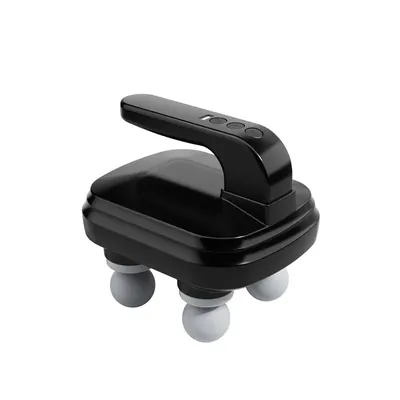
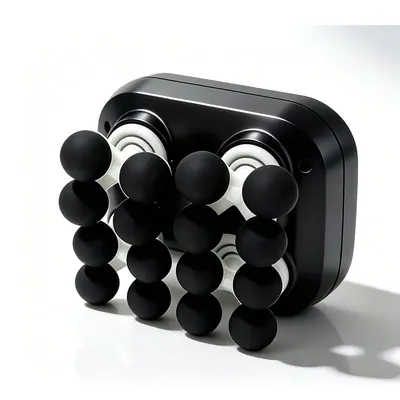
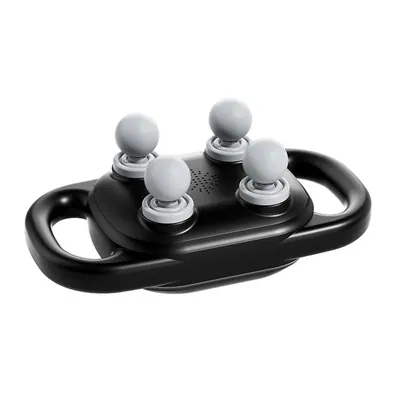
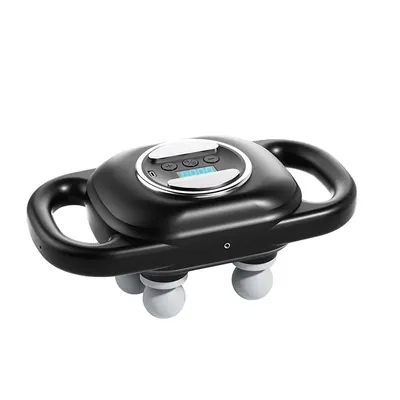
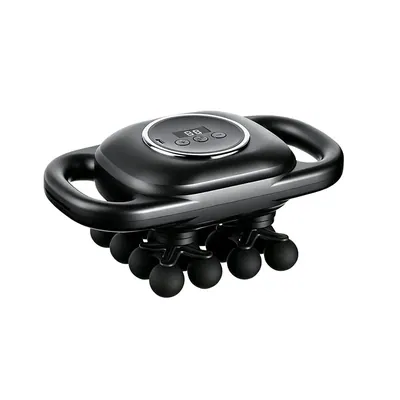
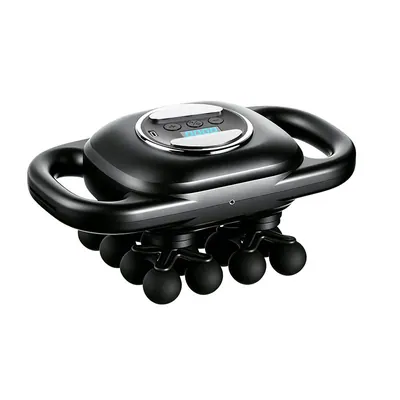
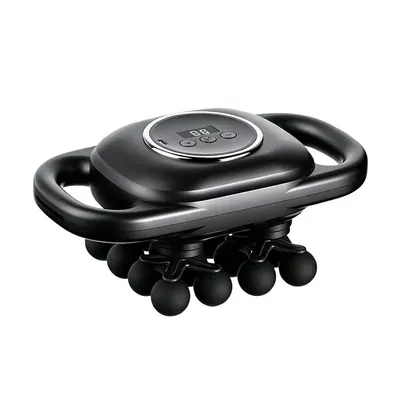
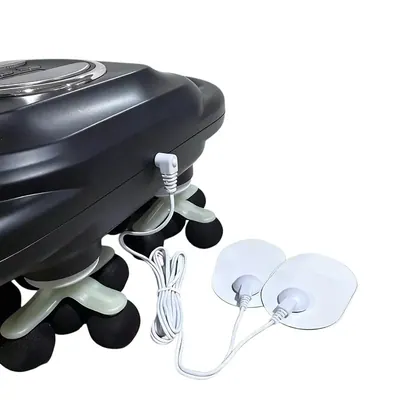
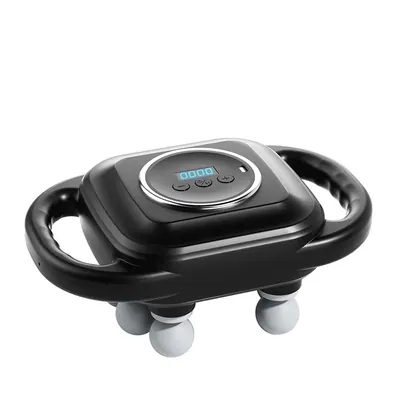
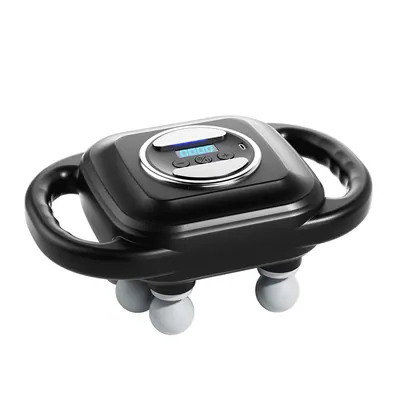
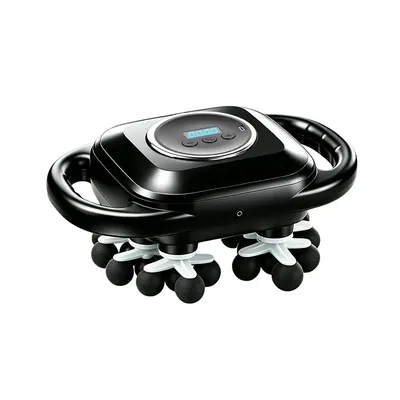
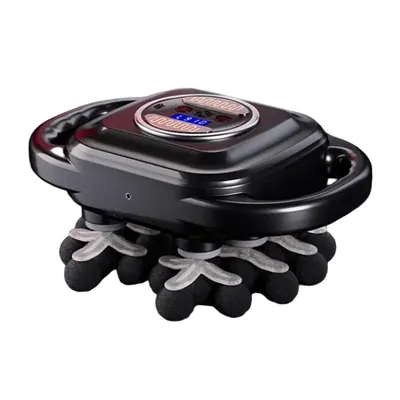
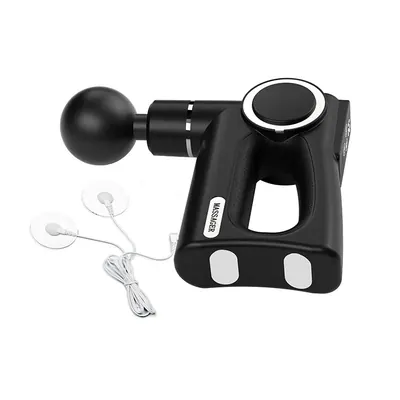
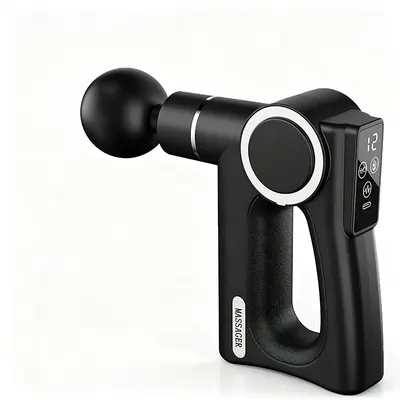
Speed is not the specification that matters
Percussion massagers are usually sold on speed, quoted in strokes per minute. That number is real, and it says very little. A gun running at high frequency with a short stroke buzzes against the skin; a gun running slower with a longer stroke reaches into the muscle. They can carry the same headline speed and feel entirely different.
The specification that describes the second one is stroke length, usually quoted in millimeters — how far the head travels on each cycle. The second is stall force, quoted in kilograms — how much pressure the motor can take before it stops moving the head. A gun with a long stroke and a low stall force feels strong until the user leans on it, and then it stops.
Together those two numbers describe the product. Speed describes the motor.
Specification decisions that move the unit cost
| Decision | What it changes | Why it moves the price |
|---|---|---|
| Stroke length | How far the head travels per cycle | A longer stroke needs a heavier counterweight, a stronger motor and a housing that damps the vibration rather than amplifying it |
| Stall force | How much pressure the motor sustains before the head stalls | The single largest driver of motor cost, and the reason two guns at the same speed differ several times in price |
| Motor type | Brushed or brushless | A brushless motor costs more, lasts longer and changes both the sound and the feel transmitted through the handle |
| Noise | How much of the motor and drivetrain noise reaches the user | Massage guns are used in offices, gyms and clinics; sound insulation adds material and a longer internal path |
| Battery | Cell capacity, whether the pack is replaceable, and the charging interface | Capacity scales the cell cost, and a replaceable pack changes how long the product can stay in service |
| Heads and interface | How many heads, the material they are made from, and how they attach | The attachment mechanism is a common failure point and a common complaint; heads are cheap individually and additive as a set |
| Display and controls | Fixed speed, stepped control, or a display with a pressure indicator | Electronics, firmware and additional tooling for the panel |
Noise is why the product gets left in the drawer
A massage gun is used on the body, frequently by someone else, often in a shared space. The sound it makes is the first thing anyone notices and the most common reason a gun is not used as often as intended.
Noise comes from the motor, the drivetrain and the housing acting as a speaker. A gun with a large stroke and a rigid housing will transmit more than one with a softer mount, and a brushless motor is quieter than a brushed one at the same output. Damping the handle also changes what the user feels, which is part of the product rather than a side effect.
Because it is a housing and mounting decision, noise is settled at tooling. If quiet operation matters — for a clinical product, a gym, or an office — it has to be specified at brief stage.
Attachments, and why the interface fails
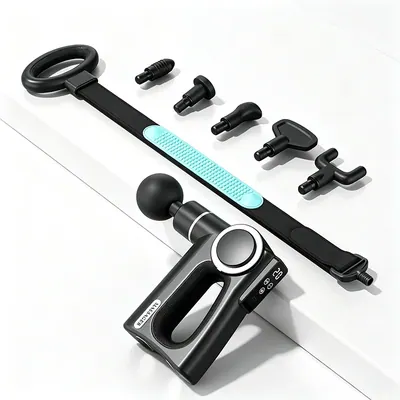
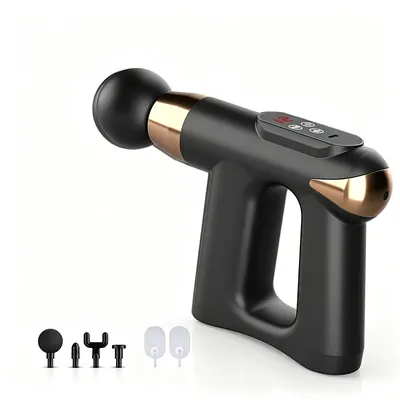
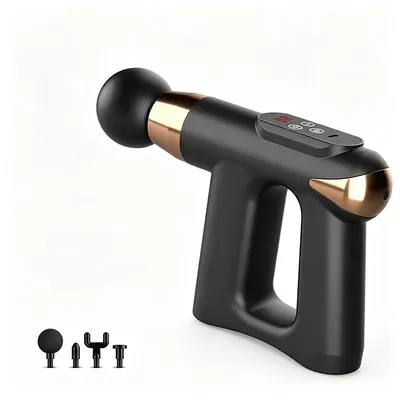
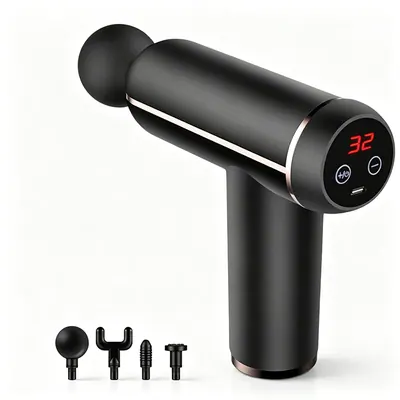
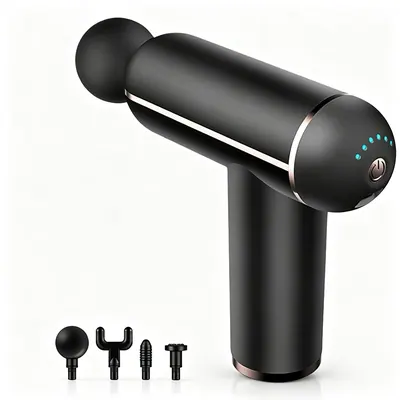
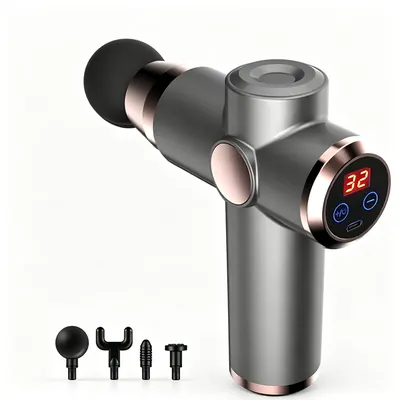
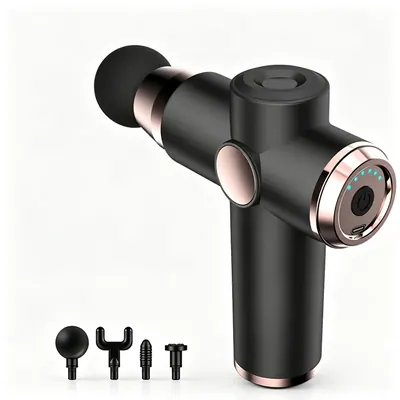
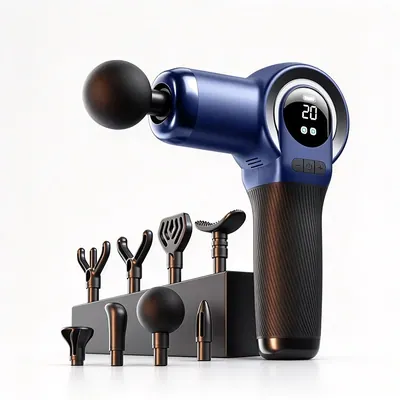
The heads are the part of the product that wears and the part that breaks. A ball head used on large muscle groups, a fork for the spine, a flat head and a bullet head cover the usual range, and the material they are made from decides how long they last against skin and how easily they clean.
The attachment mechanism is where the returns come from. A head that loosens in use, or that is difficult to remove when the user wants to change it, is the most common functional complaint. A screw or bayonet fitting that is positive in both directions costs more to tool than a push fit and is worth the difference.
Where a buyer intends to sell heads as a consumable line, the interface becomes a commercial decision as well, and should be settled at the same time as the gun.
Voltage, plug type and compliance by market
We do not pre-certify every SKU. Testing and certification are arranged for the specific model and the specific market you are ordering for, and quoted as their own line, together with the battery documentation for rechargeable models.
| Market | Voltage and plug | What is usually required |
|---|---|---|
| European Union | 220–240V for the charger, CEE 7/7 (Schuko) | CE marking with test reports behind it, plus battery documentation and the charger assessed as supplied |
| United Kingdom | 230V for the charger, BS 1363 (Type G) | UKCA marking with the test reports and the same battery documentation |
| North America | 110–120V for the charger, NEMA 1-15 or 5-15 | Listings that retailers and marketplaces accept before the product can be sold |
| Australia and New Zealand | 230–240V for the charger, AS/NZS 3112 (Type I) | Electrical safety approval, with the charger assessed separately |
| Middle East and Southeast Asia | 220–240V for the charger, plug type varies by country | Depends on the destination; conformity documents are frequently required at customs |
Branding, packaging and the accessory case
The handle is held throughout use, which makes it the most-seen surface and the right place for the logo. Pad printing and silk screen suit plastic housings; soft-touch coatings and metal accents change both cost and the impression in the hand.
In this category the case is part of the product rather than packaging for it. A moulded case that holds the gun and every head is what the customer keeps the product in, and a well-designed one is frequently the visible difference between two guns at the same price. It is also the object photographed in most listings.
A color box with the case inside suits retail; a plain outer carton suits marketplace shipping. Both are proofed before production and the artwork proof is free.
Massage gun questions buyers ask
What stroke length should we specify?
It depends on who the product is for. Compact personal guns suit a shorter stroke; professional and clinical products suit a longer one, and a longer stroke costs more because of the counterweight, motor and housing it requires. Tell us the intended user and we will shortlist accordingly.
Why do two guns with the same speed feel so different?
Because speed describes the motor and not the product. Stroke length decides how far the head travels and stall force decides how it behaves when the user leans on it. Two guns can share a headline speed and behave completely differently.
How quiet can a massage gun be made?
Quieter than a brushed motor in a rigid housing, by using a brushless motor and damping the mounting. How far that goes is a tooling decision, so if noise matters for your channel — clinical, gym or office — say so at brief stage.
What is the minimum order for a massage gun?
It is quoted per model, because it depends on the model and on how much of it is already tooled. Both the minimum order quantity and the lead time are stated on the quotation for the specific model you pick.
Can the heads be supplied as a consumable line?
Yes, and it is a common way to add a repeat purchase. Heads can be quoted as their own line with their own packaging. Whether they fit only your gun or also a widely sold format is a decision worth making before the interface is tooled.
Do the massage guns come with certification?
We do not claim blanket certification across the catalog. Certification and battery documentation are arranged for the specific model and the specific market you are ordering for, and quoted as their own line.
If the gun you need is not in this list, send the specification — stroke, stall force, motor type and intended user — and we will tell you what is available.
Need help choosing?
Send us the product type, target market and estimated volume — we will shortlist models and quote.