Immersion Blender OEM & ODM
37 stick blender models, in corded and rechargeable formats, with detachable shafts and a range of attachments. Handheld blenders are bought on three things the box rarely states clearly: whether the shaft detaches for cleaning, whether the bell actually stops the contents spattering, and how the speed behaves when the blade meets something solid.
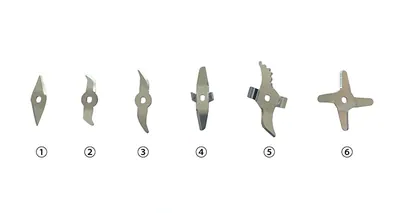
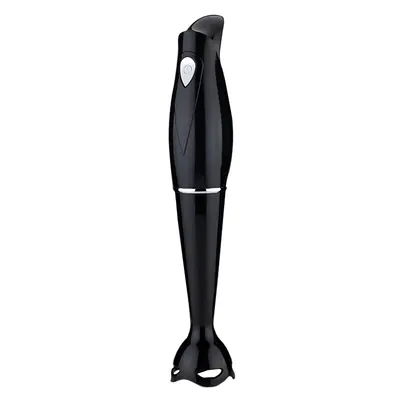
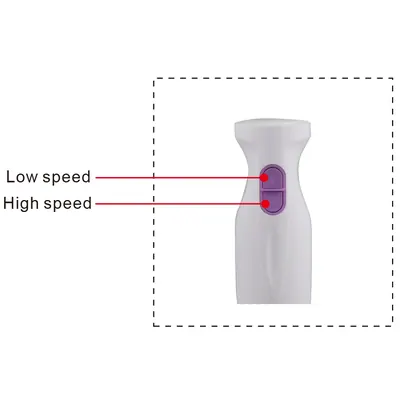
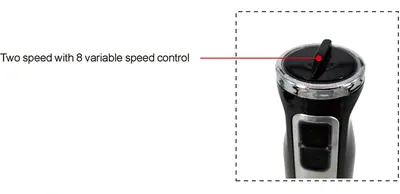
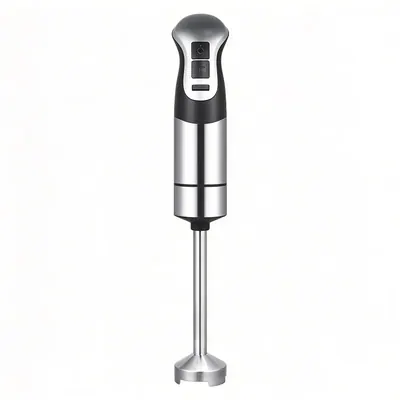
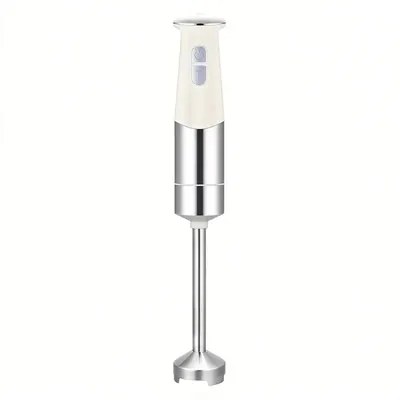
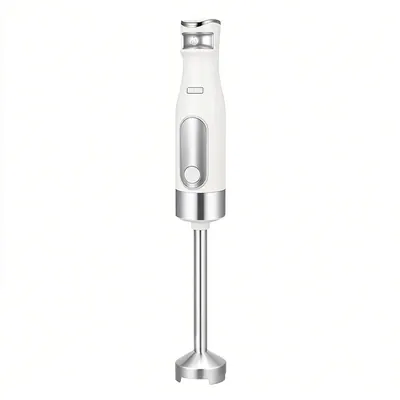
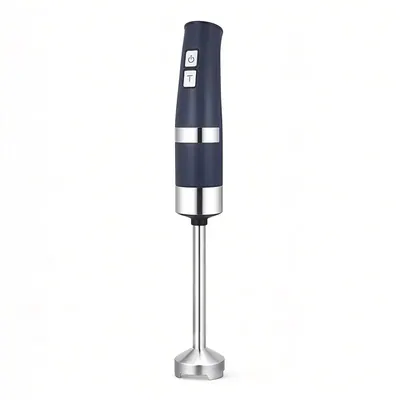
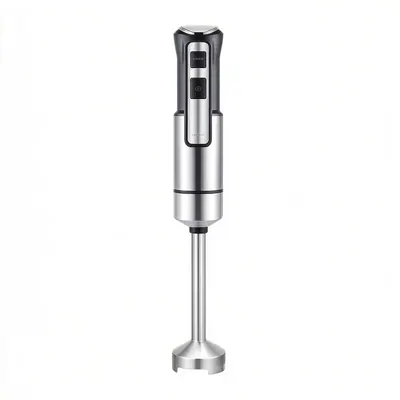
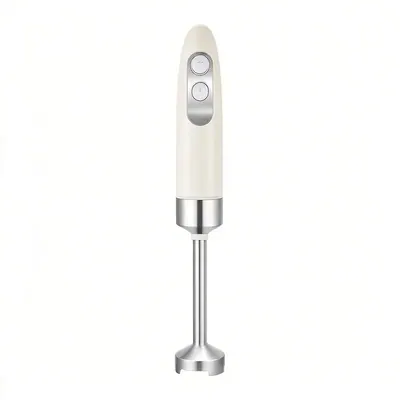
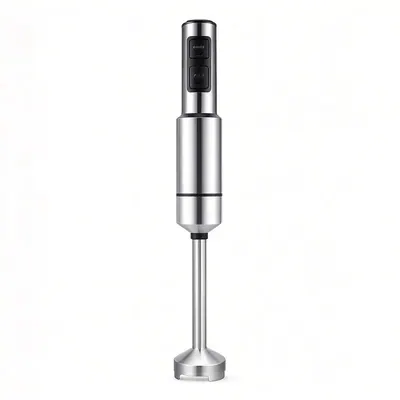
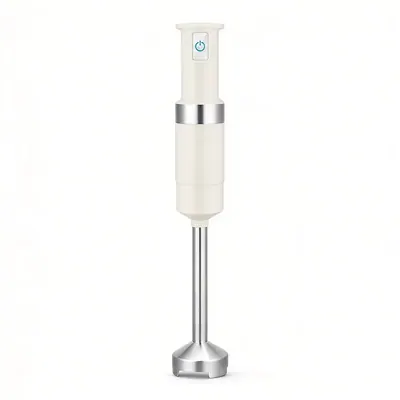
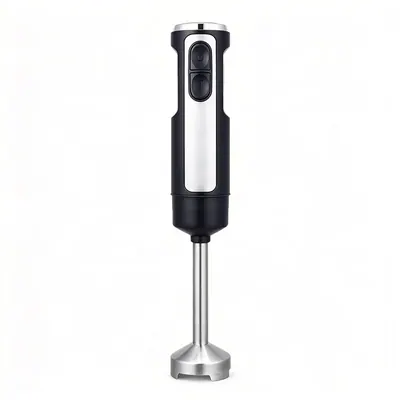
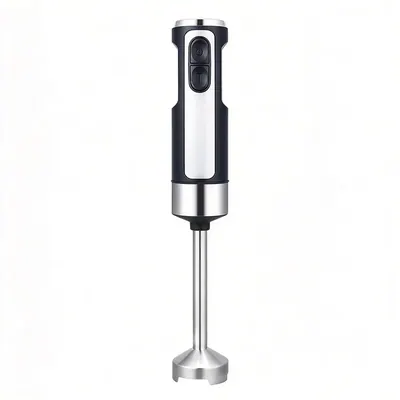
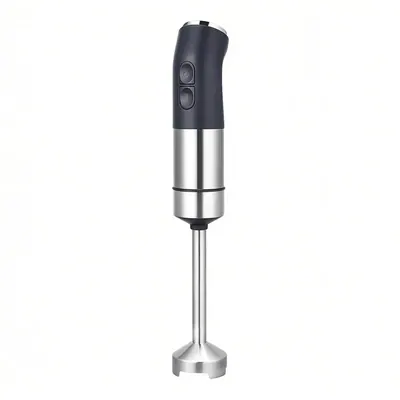
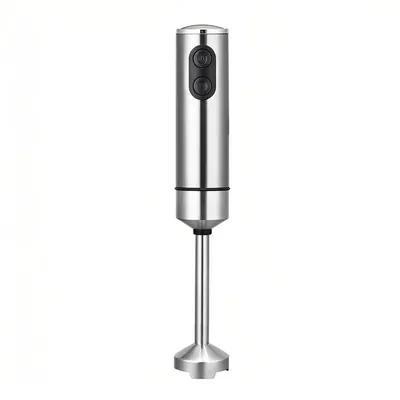
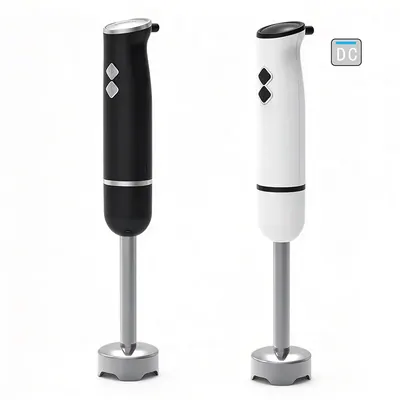
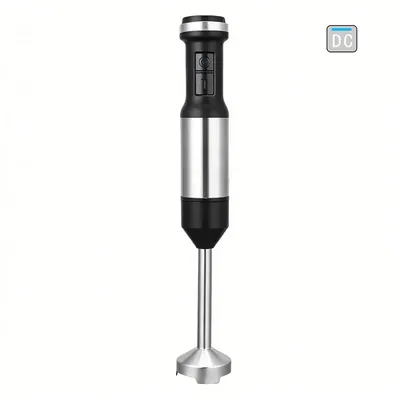
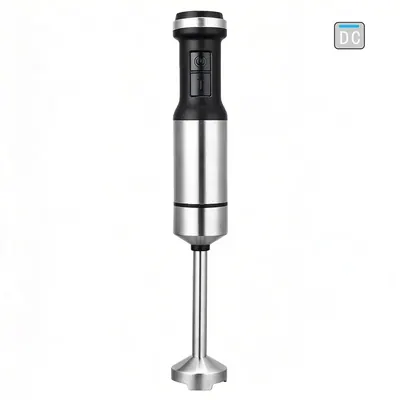
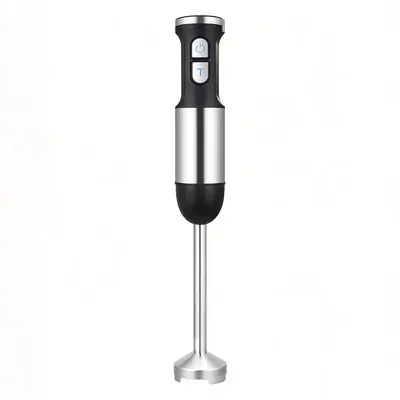
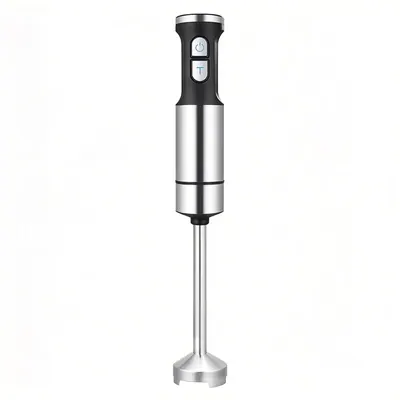
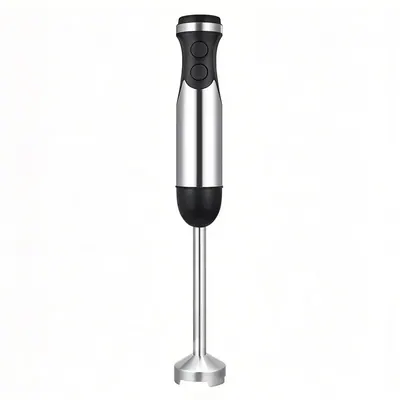
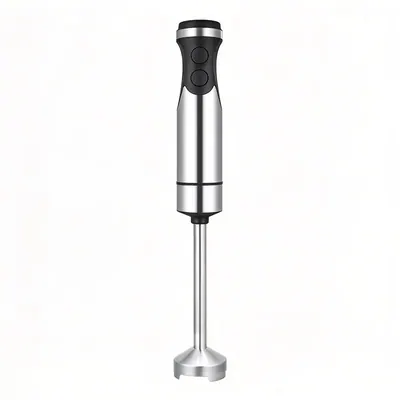
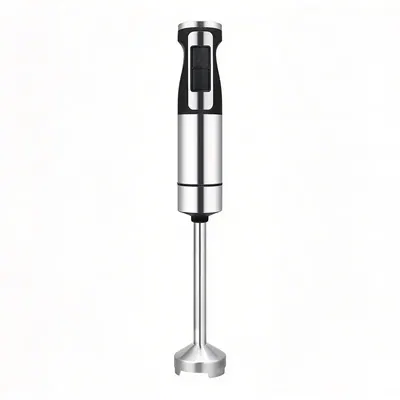
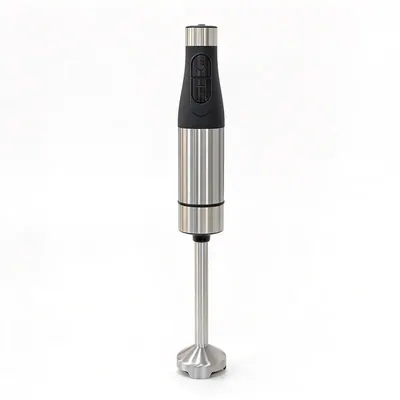
What varies between one stick blender and the next
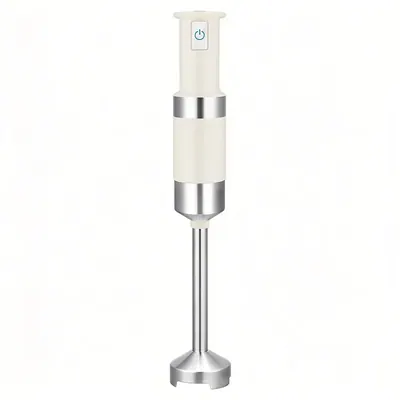
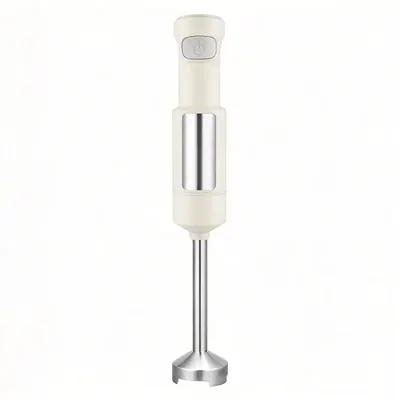
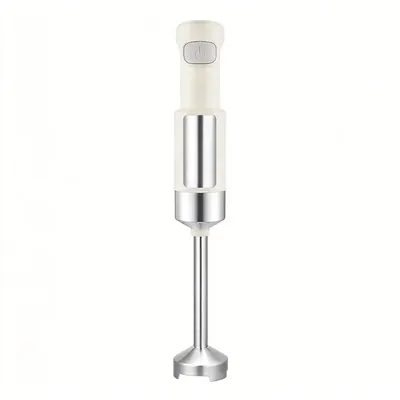
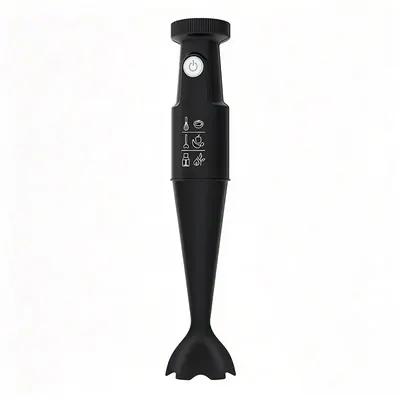
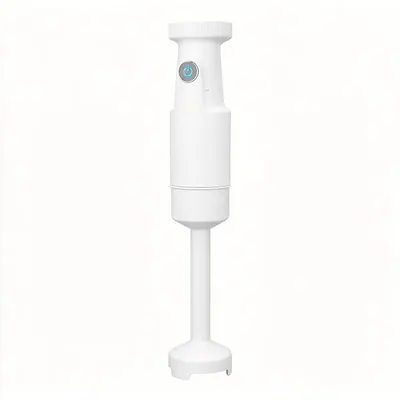
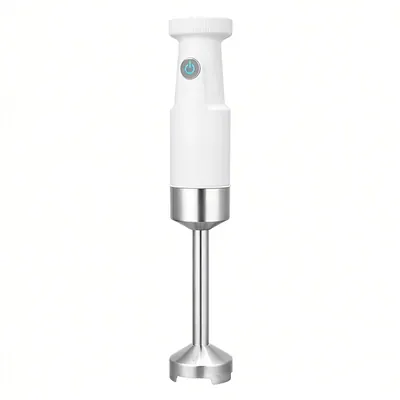
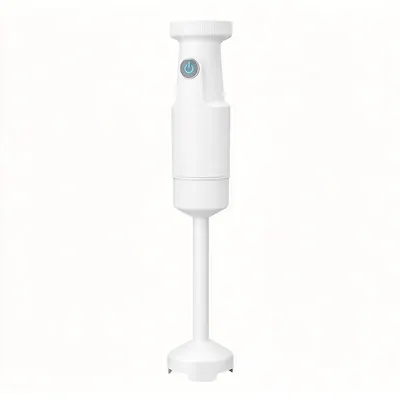
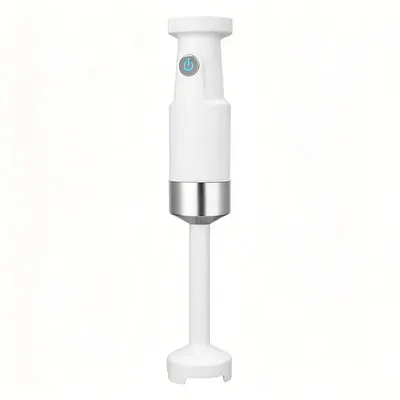
Two handheld blenders that look identical on a shelf can differ in ways that decide which one is kept. The motor draws different power and behaves differently under load. The shaft may be fixed or detachable. The bell — the flared guard around the blade — may be shaped to pull the contents down or may simply be a cover. The handle may take a whisk, a chopper bowl or a beaker, or it may take nothing.
Capacity and power figures are the easiest to compare and the least informative. The specifications that decide the reviews are the ones about cleaning, spatter and load behavior, and they are the ones worth fixing deliberately rather than accepting a default.
The three specifications that decide the reviews
| Specification | What it changes | Why it matters to the buyer |
|---|---|---|
| Detachable shaft | Whether the blending shaft unscrews from the motor body | If it does not detach, the whole unit has to be wiped around the blade. This is the most consistently raised point in reviews and the reason many buyers choose one model over another at the same price |
| Bell shape and venting | The flare of the guard around the blade and the openings in it | Determines whether the contents circulate down through the blade or spatter up the sides of the pan. A poorly shaped bell spatters no matter how powerful the motor is |
| Motor behavior under load | Whether the speed holds, drops, or the unit cuts out when the blade meets dense food | A blended soup is easy; frozen fruit or a thick dough is not. How the motor behaves when loaded separates a blender that is used from one that is put away |
All three are tooling decisions. None of them can be corrected after the mould is cut, and none of them is visible on a specification sheet.
Corded or rechargeable
A corded blender draws mains power and can be built with a larger motor for the same cost. It cannot leave the kitchen, and the cable is the part that fails first when the unit is stored in a drawer.
A rechargeable blender trades power for portability. For a travel or camping product that is the right trade; for a kitchen product used on thick mixtures it usually is not, because a battery that runs a motor at low speed under load produces a result that is disappointing rather than broken.
The practical rule is that rechargeable formats make good second blenders and poor first ones. Where a buyer wants both, they are two products rather than one.
Materials and cleaning
Everything below the handle touches food, which makes the shaft, the blade, the bell and the beaker food-contact parts. Stainless steel shafts are the usual choice; coatings on blades affect both cutting and cleaning. A beaker supplied with the unit is also a food-contact item and is frequently specified in a material the buyer has not considered.
Cleaning decides whether the product stays in use. A shaft that detaches and can go in a dishwasher is used more often than one that has to be rinsed by hand around a fixed blade, and the difference shows up in reviews long before any motor failure does.
If the product is to be presented as dishwasher-safe, that is a material and assembly decision made at tooling, not a claim added to the packaging afterwards.
Voltage, plug type and compliance by market
We do not pre-certify every SKU. Testing and certification are arranged for the specific model and the specific market you are ordering for, and quoted as their own line. For rechargeable models, battery documentation is part of that.
| Market | Voltage and plug | What is usually required |
|---|---|---|
| European Union | 220–240V, CEE 7/7 (Schuko) | CE marking with test reports behind it, plus food-contact material documentation for the shaft, blade and beaker |
| United Kingdom | 230V, BS 1363 (Type G) | UKCA marking with the test reports and the same material documentation |
| North America | 110–120V, NEMA 1-15 or 5-15 | Listings that retailers accept, together with the material documentation for food-contact parts |
| Australia and New Zealand | 230–240V, AS/NZS 3112 (Type I) | Electrical safety approval and food-contact material documentation |
| Middle East and Southeast Asia | 220–240V, plug type varies by country | Depends on the destination; conformity documents are frequently required at customs |
Branding and what goes in the box
The motor body is the branded surface, and pad printing or silk screen on the housing is the usual method, with heat transfer on coated surfaces. Because the handle is held, the logo position matters more than its size.
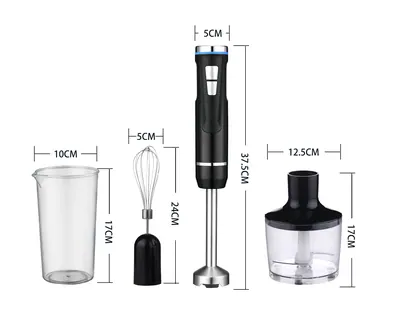
The accessory set is frequently what distinguishes two products at the same price. A whisk, a chopper bowl, a beaker with a lid and a wall mount each add modest cost individually and meaningfully to what the buyer sees. Sets are also easier to photograph for a listing than a bare motor body.
Packaging follows the channel: a color box for shelf retail, a brown box for marketplace, and a fitted box where the accessory set is part of the value. The artwork proof is free and is produced before anything is printed.
Immersion blender questions buyers ask
Should the shaft be detachable?
For a kitchen product, yes. A detachable shaft is easier to clean and is one of the most consistently mentioned points in reviews. It changes the coupling design, so it has to be decided before tooling rather than added later.
How do we stop it spattering?
By the shape of the bell and the venting in it, not by lowering the power. A bell that draws the contents down through the blade spatters far less than one that simply covers it. Tell us what the blender will mostly be used on and the bell can be specified for it.
What is the minimum order for a stick blender?
It is quoted per model, because it depends on the model and on how much of it is already tooled. Both the minimum order quantity and the lead time are stated on the quotation for the specific model you pick.
Do the blenders come with certification?
We do not claim blanket certification across the catalog. Electrical certification and the food-contact material documentation are arranged for the specific model and the specific market you are ordering for, and quoted as their own line.
Can the shaft and beaker go in a dishwasher?
It depends on the model and the materials, and it is worth confirming because it is a common question in reviews. We will state it for the model you are considering rather than for the category, and if the product is to be presented as dishwasher-safe that is designed in at tooling.
Can we see a sample before ordering in bulk?
Yes. A production sample is produced and shipped before bulk production, and in this category we recommend using it on the mixture it is intended for rather than only inspecting it.
If the blender you need is not in this list, send the specification — corded or rechargeable, shaft type, wattage class and accessories — and we will tell you what is available.
Need help choosing?
Send us the product type, target market and estimated volume — we will shortlist models and quote.