Hair Dryer OEM & ODM
A hair dryer is sold on airflow and heat, but what decides whether the buyer still likes it a year later is the motor, the heater control and the cord entry. Those three parts set both the price and the failure rate, and they are the parts a specification sheet usually leaves blank.
Hair Dryer OEM & ODM: models, specifications and MOQ
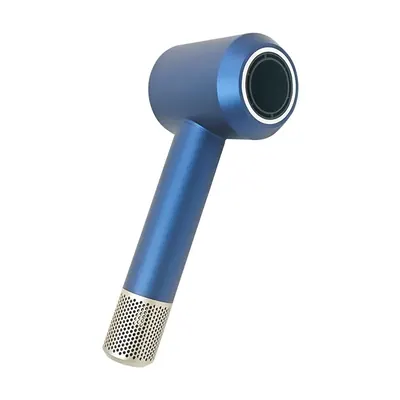
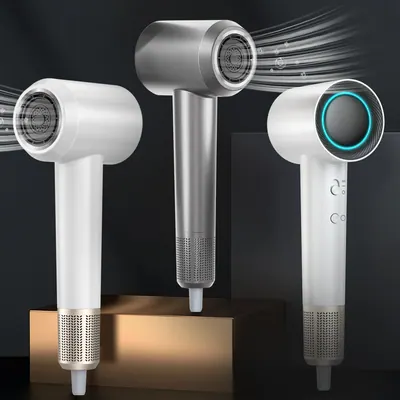
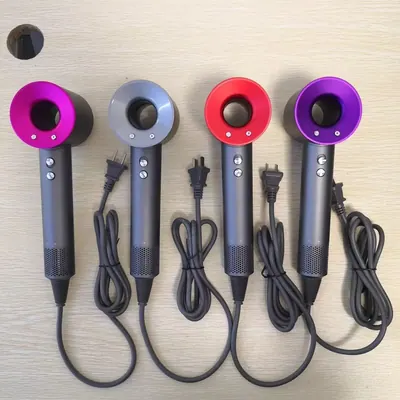
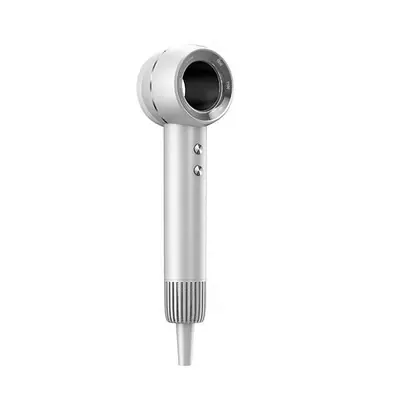
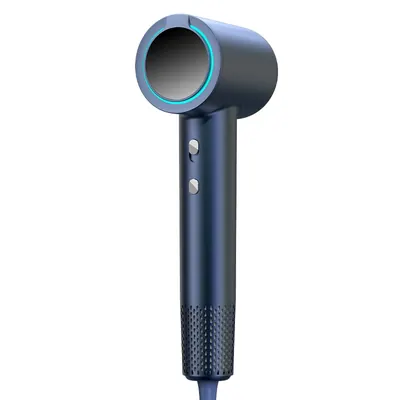
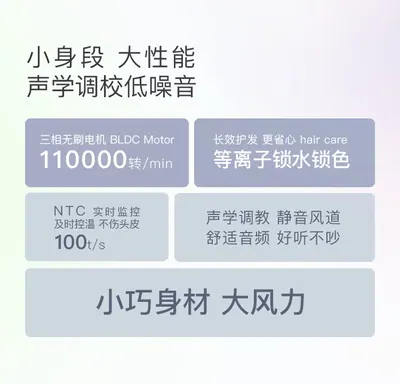
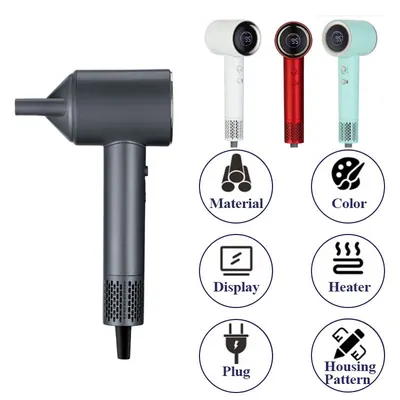
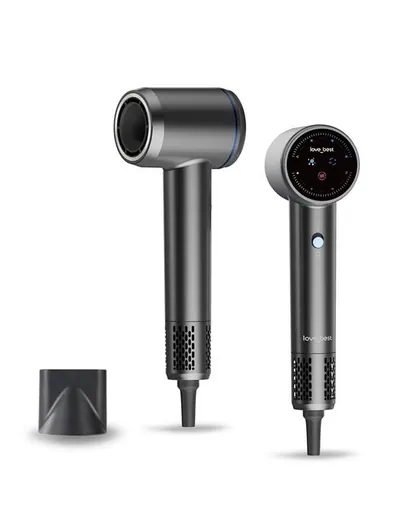
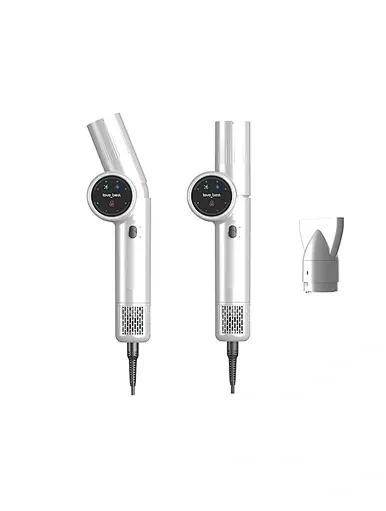
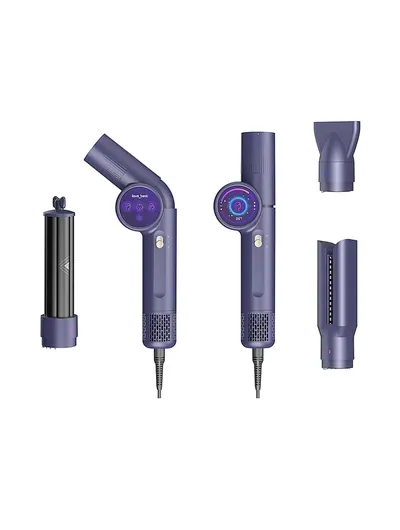
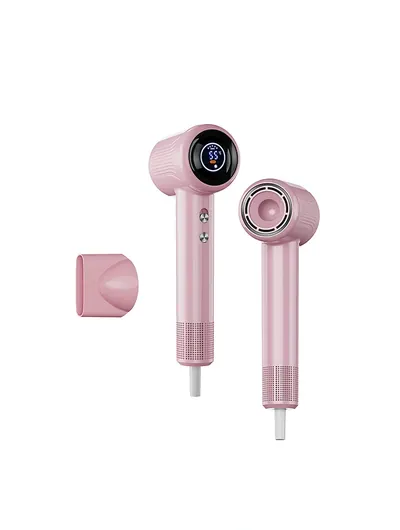
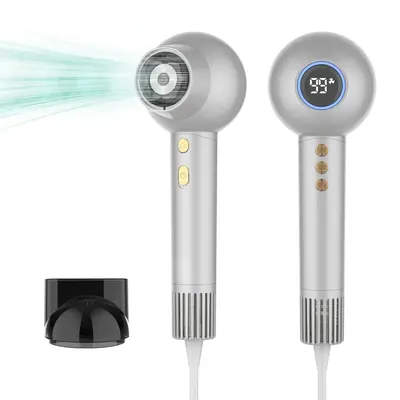
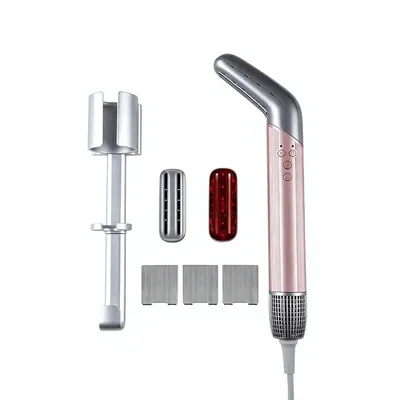
Airflow is the number that matters, and it is rarely the number quoted
A dryer is judged by how fast it removes water. That depends on mass flow of warm air, not on peak temperature and not on the wattage printed on the box. Two 2000 W dryers can differ by 40% in airflow, because the fan, the duct and the heater geometry decide how much of that power reaches the hair instead of heating the plastic housing.
The practical consequence for an OEM order is that a wattage figure is not a specification on its own. The useful specification is airflow in cubic meters per hour at the nozzle, measured on the same rig, plus the outlet temperature at each of the heat settings. Ask for both and a supplier can meet them; ask only for watts and the answer is whatever the last customer accepted.
Wattage still matters, but for a different reason: it sets the current draw and therefore the plug, the cord and the switch rating, and in markets with 110–120 V it decides whether the same heater can reach the same outlet temperature at all.
Motor type: AC, DC, or brushless
The motor is the single biggest split in the category. An AC motor is cheap, runs directly off the mains, and is heavy and noisy — it suits a value dryer. A DC motor uses a rectifier and runs faster and lighter for a similar cost, and it is what most mid-range dryers use. A brushless DC motor is quieter, longer-lived and more efficient, and it costs several times more.
The difference shows up in two places: noise and service life. A brushed DC motor is a wear item; at 800 hours the brushes are the limit, which is roughly two years of daily use. Brushless units are typically rated well past that, which is why professional and salon channels ask for them and value channels do not.
| Motor | Cost position | Noise | Service life | Where it belongs |
|---|---|---|---|---|
| AC | Lowest | Highest | Long, but the body is heavy | Value retail, hotel, promotional |
| Brushed DC | Middle | Moderate | ~800 h before brushes wear | Mainstream retail |
| Brushless DC | Highest | Lowest | Several times the brushed figure | Salon, professional, premium retail |
Heat control, and why the thermostat is a marketing feature
Every dryer has a thermal cut-out for safety. What differs is whether the outlet temperature is actively regulated or simply limited. An unregulated dryer runs hotter as the airflow drops (when the inlet filter clogs, for example), which is the normal path to a scorched housing or a burnt-out element.
A regulated unit measures the outlet air and modulates the element, which costs a sensor and a control board but keeps the temperature stable across settings and across a clogged filter. For a retail program this is the difference between a dryer that lasts and one that comes back.
Ionic and ceramic-coating features sit on top of this and are mostly marketing. The one feature that is not marketing is a cold shot: a separate switch that cuts the element and runs the fan, which sets a style and is expected in any dryer sold above the value tier.
Cord, plug and the swivel that fails first
The cord entry is the most common mechanical failure on a hand-held appliance, because it takes the full bending load every time the dryer is put down. A moulded strain relief with a swivel joint costs very little and removes most of that load; a straight grommet does not.
Cord length is also a market decision rather than an engineering one. European retail expects 1.8–2.5 m, North American value channels often accept 1.5 m, and salon models run to 3 m because the dryer is used at arm's length from a fixed outlet.
Plug type follows the destination market, and it has to be moulded rather than adapted. A dryer shipped with a travel adapter is a compliance problem in every market that inspects imports, and it is the first thing a customs check looks at.
Market configuration at a glance
| Market | Voltage | Typical plug | What changes in the specification |
|---|---|---|---|
| EU / UK | 220–240 V | C / F, or G for UK | Higher airflow for the same wattage; longer cord expected |
| North America | 110–120 V | A / B | Higher current for the same power; heavier cord gauge required |
| Japan | 100 V | A | Lowest voltage, so the element and airflow are re-rated, not just re-labeled |
| Australia / NZ | 230–240 V | I | Insulated pins and a switch requirement in some channels |
| Middle East | 220–240 V | C / G | Often dual-voltage tolerance and a longer cord for salon use |
Where the cost actually sits
Four decisions move the unit price more than anything else: the motor type, whether the heat is regulated, the finish on the housing, and the accessories. Of those, the first two also decide the return rate, so they are the two not worth cheapening.
Housing finish is the most negotiable. A painted ABS shell and a soft-touch overmould can look identical in a photograph and differ by a meaningful amount per unit; the overmould also hides scratches better, which affects how the product is reviewed.
Accessories — concentrator, diffuser, comb — are usually quoted separately because they are separate tooling. A program that includes a diffuser is a different order from one that does not, even at the same dryer.
Hair dryer questions buyers ask
Is a higher wattage always a better dryer?
No. Wattage sets the electrical load and the heat available, but airflow decides drying time. A well-ducted 1800 W dryer can dry faster than a poorly-ducted 2200 W one, and it will run cooler at the nozzle, which is easier on the hair.
Why do dryers fail at the cord first?
Because the cord entry takes a bending load every time the dryer is set down. A moulded strain relief with a swivel removes most of it; a straight grommet concentrates the load on a few millimeters of copper.
Can one dryer be sold in both 110 V and 220 V markets?
Not by swapping the plug. At 110 V the same element draws roughly twice the current for the same power, so the heater, the switch, the cord gauge and often the airflow have to be re-rated. It is a second design, not a second SKU.
What should be measured on a sample before approving it?
Airflow at the nozzle, outlet temperature on each setting after two minutes, noise at one meter, and the temperature rise on the housing at the grip. Those four numbers predict how the dryer will be reviewed better than any feature list.
If the dryer you need is not in this list, send the specification — voltage, airflow class, motor type and controls — and we will tell you what is available and what has to be tooled.
Need help choosing?
Send us the product type, target market and estimated volume — we will shortlist models and quote.