Garlic Chopper OEM & ODM
A garlic chopper is sold on wattage it does not need, because the work is done at low speed with high torque. What decides whether it chops garlic or smears it is the blade geometry and the bowl shape — and a dull blade turns garlic into paste, which is a different ingredient.

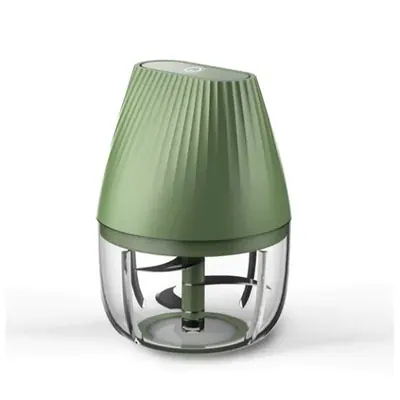
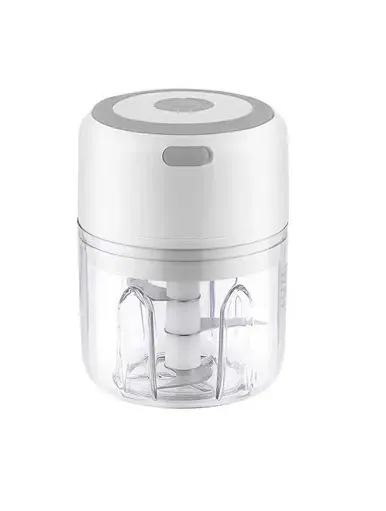



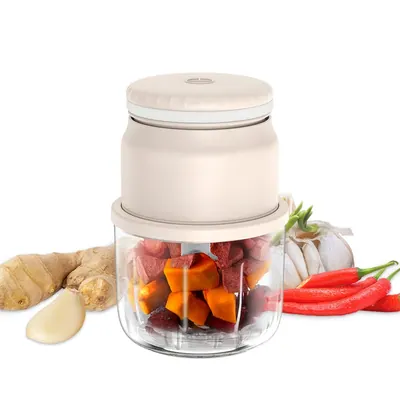
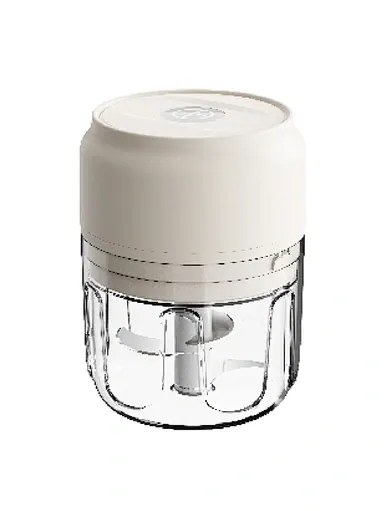

Low speed, high torque: why wattage misleads here
Chopping garlic needs torque at low rpm, not power at high rpm. A 200 W motor geared down through a planetary drive will chop better than a 400 W motor spinning a blade fast, because the fast blade throws the cloves to the wall instead of cutting them.
The specification that matters is blade rpm at load and the gap between the blade and the bowl floor. A blade sitting 1 mm above the floor leaves a layer of unchopped garlic; a blade that scrapes the floor chops evenly but wears the bowl.
Blade count and angle decide the result
Two curved blades at opposing angles cut and lift; four straight blades cut and pack. For garlic the curved pair is better because the lift keeps the pieces moving into the blade path instead of letting them settle in one place.
The blade material matters more than the count: stamped stainless loses its edge quickly, and a dull blade crushes garlic and releases more of the sulfur compounds, which is why a cheap chopper makes the whole kitchen smell stronger.
| Design | Result on garlic | Cleaning | Where it belongs |
|---|---|---|---|
| 2 curved blades, low rpm | Even chop, less smearing | Rinse, small parts | Mainstream |
| 4 straight blades, high rpm | Fast but uneven, packs at the wall | Rinse | Value |
| Pull-cord, 3 blades | Good for small quantities | Whole unit rinses | Camping, gift |
| Blade + bowl scraper | Most even, least waste | Extra part to clean | Premium |
The bowl shape is a design decision, not a moulding detail
A bowl with a flat floor and a square corner traps garlic that the blade never reaches. A bowl with a rounded floor and a slight inward slope keeps the pieces in the blade path, which is why the good units look simple and work quickly.
Bowl material matters too: polycarbonate scratches and holds smell, while Tritan and glass do not. For a product used daily on garlic and chilli, that is the difference between a bowl that is clean and one that is permanently tainted.
Safety interlock, and the small parts that fail
The lid interlock is a microswitch or a mechanical pin, and it is the part that lets the customer run the chopper with the lid off after the switch wears. A magnetic interlock has no wearing parts and is the better choice for a product with a plastic lid.
The other failure is the shaft seal: garlic juice is acidic and gets into the gearbox past a cheap seal, and the motor then seizes. A lip seal and a shaft with a shoulder cost very little and are the difference between a two-year product and a two-month one.
Market configuration at a glance
| Market | Voltage | Plug | What changes |
|---|---|---|---|
| EU / UK | 220–240 V | C / F, G | Food-contact declaration, WEEE, noise declaration |
| North America | 110–120 V | A / B | Higher current; gear ratio often changed |
| Japan | 100 V | A | Re-rated motor; torque at low speed is the design constraint |
| SE Asia | 220–240 V | C / G | Chilli and ginger use; stronger bowl material wanted |
Garlic chopper questions buyers ask
Why does my chopper make paste instead of pieces?
A dull or slow-moving blade crushes rather than cuts, and that releases more sulfur compounds. Blade sharpness, rpm and the gap to the bowl floor decide the result, not the motor wattage.
Is a pull-cord chopper worth selling?
For small quantities and for a gift or camping market, yes. It cannot handle a full bulb and the cord is a wear item, but it has no motor, no cord and nothing to fail electrically.
Why does the bowl keep the smell?
Because polycarbonate scratches and absorbs oils. Tritan or glass does not, and for a product used on garlic and chilli weekly that difference is what decides whether the customer keeps using it.
What fails first?
The lid interlock and the shaft seal. The interlock wears until the unit runs with the lid off; the seal lets acidic juice into the gearbox and seizes the motor. Both are cheap parts to specify properly.
Tell us the quantity per batch and whether the bowl must be glass or Tritan, and we will specify blade geometry and gear ratio together.
Need help choosing?
Send us the product type, target market and estimated volume — we will shortlist models and quote.