Electric Iron OEM & ODM
16 electric iron and steam iron models, in handheld and conventional formats, corded and travel. An iron is the one product in the catalog that is used directly against something the owner cannot replace, and the two systems that decide whether it marks the garment are the anti-drip path and the anti-calc arrangement.
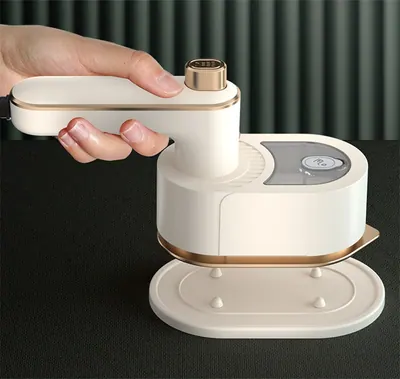
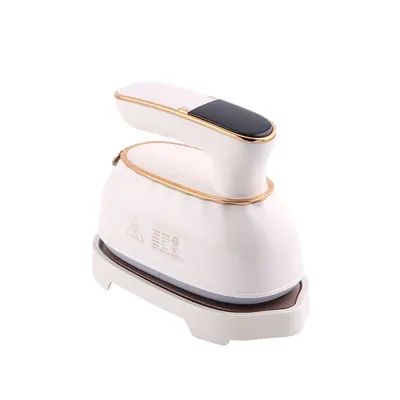
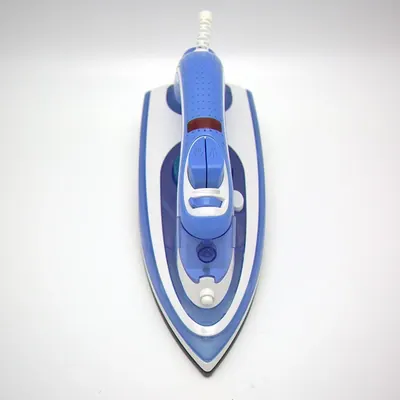
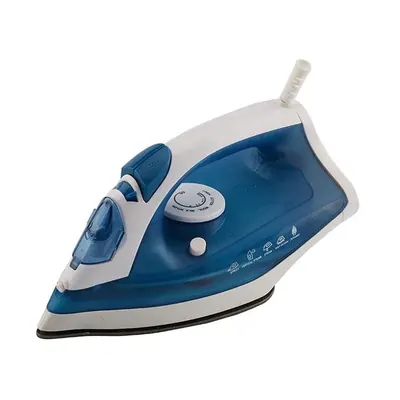
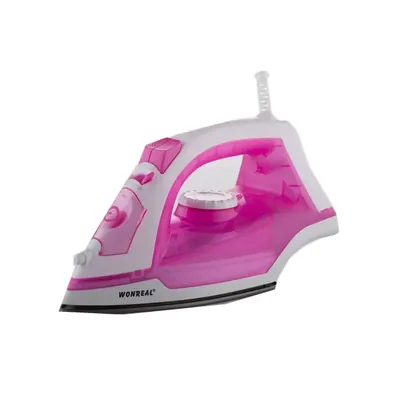
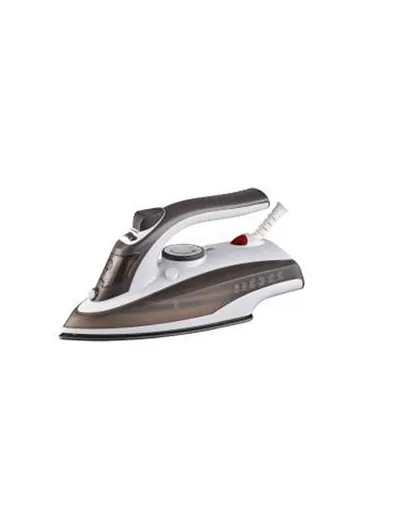
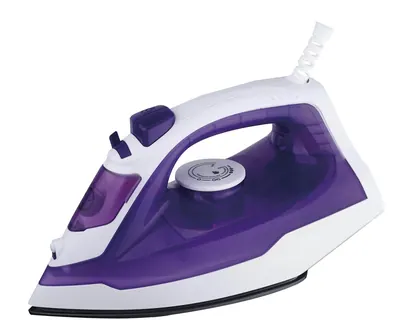
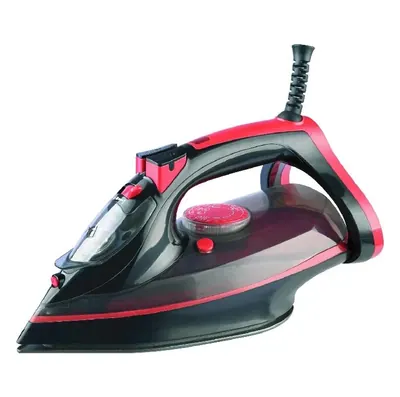
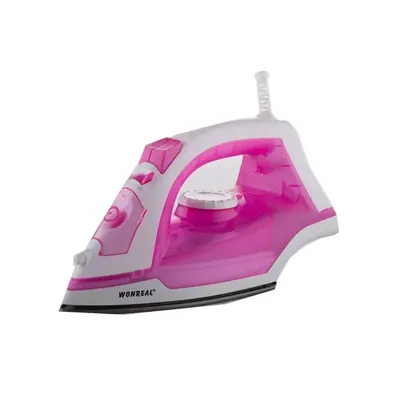
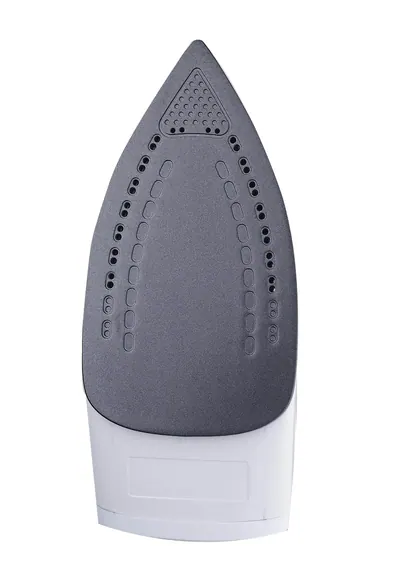
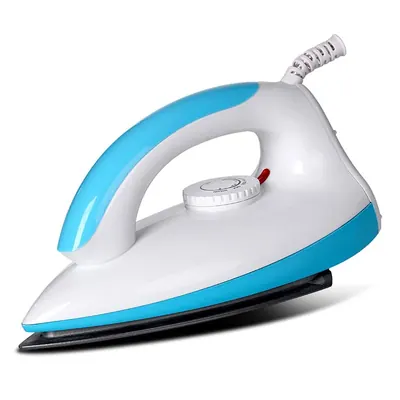
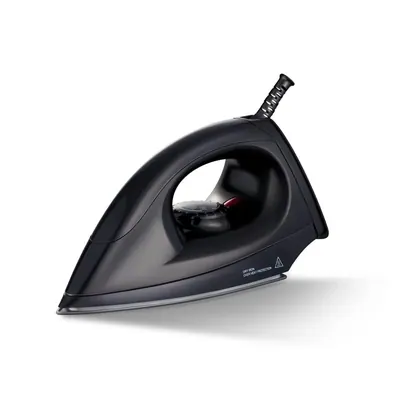
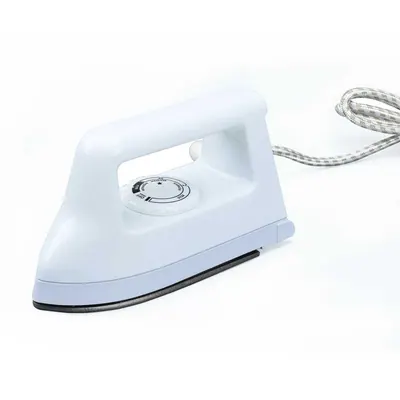
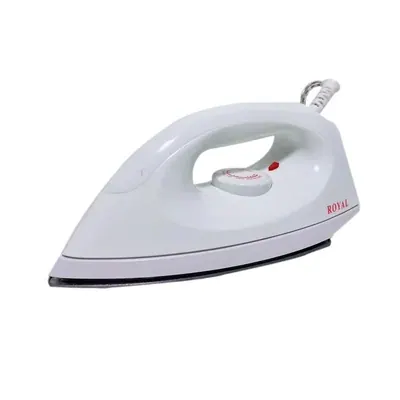
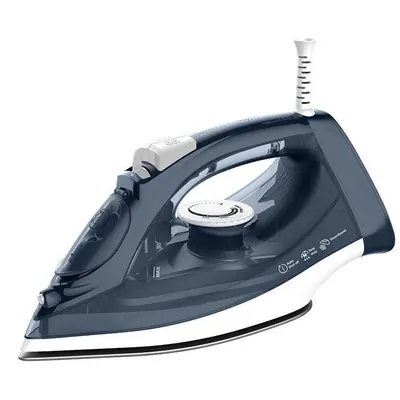
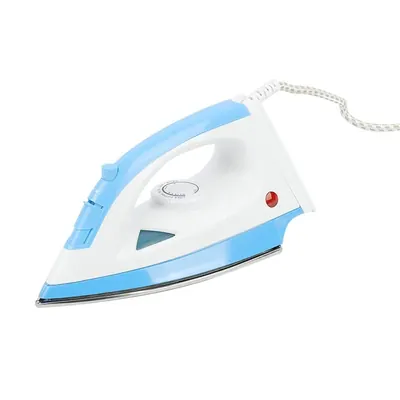
The soleplate is the durability story
An iron fails in use before it fails electrically. The soleplate coating wears or becomes scratched, the plate begins to drag, and the appliance is retired with the element still working. In a steam iron the failure is frequently faster, because scale and mineral deposits build on the plate and on the steam holes.
What matters is the substrate as much as the coating. A coating applied to a poorly finished soleplate surface lifts early regardless of its quality, and the plate has to tolerate being heated, cooled and pressed against fabric repeatedly. Where the soleplate is marketed as scratch-resistant or as gliding, that is a material and finishing decision made at tooling.
A scratched soleplate is also what produces the failure that damages the customer's property: a rough surface snags a delicate fabric, and a mark on a garment is not a product fault the customer forgives.
Anti-drip and anti-calc, and why both matter
| System | What it prevents | What happens without it |
|---|---|---|
| Anti-drip | Water reaching the soleplate before the plate is hot enough to turn it to steam | The iron spits water onto the garment, which is the most common complaint about any steam iron |
| Anti-calc | Mineral scale building up in the steam chamber and blocking the steam holes | Steam output falls steadily, and the scale eventually comes out onto the fabric as brown marks |
| Self-clean | Scale being flushed out of the chamber on demand | The chamber has to be descaled manually, which most customers do not do |
| Temperature control | The plate being hotter or cooler than the fabric needs | Too hot scorches the fabric, too cool does not press it, and both are attributed to the iron rather than to the setting |
These four are worth specifying together rather than individually. An iron with a good anti-drip and no anti-calc removes one complaint and replaces it with another.
Water quality decides how the iron behaves
An iron is filled with whatever water the customer has. In a hard-water area, scale builds quickly, steam output falls and the anti-calc system has to work harder than in a soft-water area. Two customers with the same iron and different water will have different experiences of it.
That makes the manual and the packaging part of the specification. Saying plainly what water to use, and how often to run the self-clean cycle, changes the outcome more than a small improvement in the steam chamber does. It also removes the most common misattribution, which is that the iron has stopped steaming when in fact its holes are blocked.
Where a buyer is selling into a market with known hard water, a model with a larger self-clean capability and a more accessible chamber is worth choosing over one with a higher steam output.
Specification decisions that move the unit cost
| Decision | What it changes | Why it moves the price |
|---|---|---|
| Soleplate | Stainless steel, ceramic, coated aluminum, and the finish of the surface | Glide, scratch resistance and how long the plate stays smooth, and it is the part the customer judges the iron by |
| Steam output and burst | Continuous output, and whether a burst function is fitted | A higher continuous output needs a larger chamber and a stronger element; a burst needs a pump or an accumulator |
| Anti-drip and anti-calc | Whether either is fitted, and how the calc system is arranged | Both add components and assembly, and both address the two most common complaints in the category |
| Temperature control | Mechanical dial, or an electronic control with a display and a fabric setting | A thermostat with a wider dead band behaves differently from closed-loop control, and an electronic control adds a sensor and firmware |
| Auto shut-off | Whether the iron cuts out when standing or on its side | Cheap to add and increasingly expected, and its absence is a safety point rather than a convenience one |
| Format | Conventional, handheld steam iron, or travel with dual voltage | A handheld format changes the housing entirely; dual voltage is a separate approval and limits the power draw |
| Cord and swivel | Length, and whether it swivels at the body | A swivel is a common failure point if under-specified on a product that is constantly turned in the hand |
Voltage, plug type and compliance by market
We do not pre-certify every SKU. Testing and certification are arranged for the specific model and the specific market you are ordering for, and quoted as their own line. Dual-voltage travel models are a separate configuration and are approved as such.
| Market | Voltage and plug | What is usually required |
|---|---|---|
| European Union | 220–240V, CEE 7/7 (Schuko) | CE marking with test reports behind it; travel models supplied with an adapter are assessed as supplied |
| United Kingdom | 230V, BS 1363 (Type G) | UKCA marking with the test reports, and a UK plug means the product is approved as a UK product |
| North America | 110–120V, NEMA 1-15 or 5-15 | Listings that retailers and marketplaces accept before the product can be sold |
| Australia and New Zealand | 230–240V, AS/NZS 3112 (Type I) | Electrical safety approval, with dual-voltage travel variants treated as separate configurations |
| Middle East and Southeast Asia | 220–240V, plug type varies by country | Depends on the destination; conformity documents are frequently required at customs |
Branding, packaging and the travel format
The handle is held throughout use and is the branded surface, applied by pad printing or silk screen on plastic. The soleplate itself is a branding surface on some models, and it is a visible one — a printed or patterned plate is frequently part of the product's identity.
Travel irons are bought for packing, which makes the case and the folding handle part of the product rather than accessories. A pouch that survives a suitcase and a handle that folds flat are what the buyer compares, and both are inexpensive relative to the difference they make.
Packaging follows the channel: a color box for retail, a plain carton for marketplace shipping. Both are proofed before production and the artwork proof is free.
Electric iron questions buyers ask
Why do steam irons spit water?
Because water reached the soleplate before the plate was hot enough to turn it to steam. An anti-drip system prevents it, and it is the single most common complaint in the category. It is worth confirming on a sample from cold, because that is when it happens.
How do we stop the iron scaling up?
By fitting an anti-calc system and a self-clean cycle, and by telling the customer plainly what water to use and how often to run the cycle. Scale is a water problem before it is an iron problem, and two customers with the same iron and different water will have different experiences.
What is the most important part of the iron?
The soleplate, in practice. It is what the customer judges the product by and what ends its life in most cases — a plate that scratches or drags is retired with the element still working, and a rough plate is also what marks a delicate garment.
What is the minimum order for an electric iron?
It is quoted per model, because it depends on the model and on how much of it is already tooled. Both the minimum order quantity and the lead time are stated on the quotation for the specific model you pick.
Do the irons come with certification?
We do not claim blanket certification across the catalog. Certification is arranged for the specific model and the specific market you are ordering for, and quoted as their own line. Ask us about the model you are considering and we will tell you what exists for it today.
Can we see a sample before ordering in bulk?
Yes. A production sample is produced and shipped before bulk production, and in this category we recommend using it on the fabrics it is intended for rather than only confirming that it heats.
If the iron you need is not in this list, send the specification — format, soleplate, steam output and travel requirements — and we will tell you what is available.
Need help choosing?
Send us the product type, target market and estimated volume — we will shortlist models and quote.