Egg Cooker OEM & ODM
An egg cooker is a timer pretending to be an appliance, and the timing depends on water volume, egg size and starting temperature. That is why the same cooker produces a perfect soft egg for one customer and an overcooked one for another, and why the measuring cup is the most important part in the box.
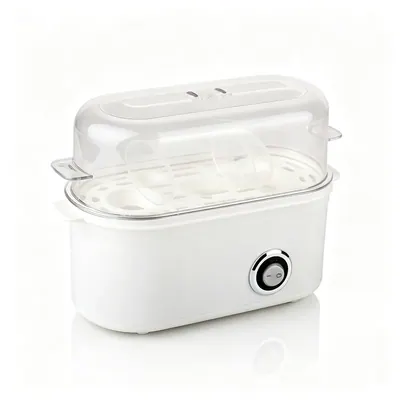
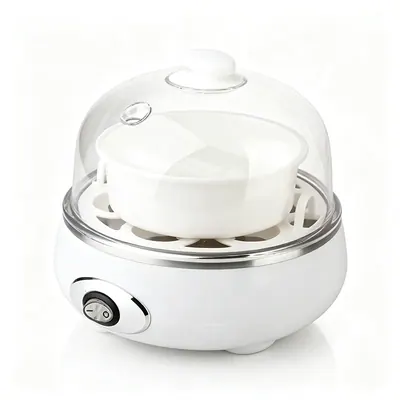
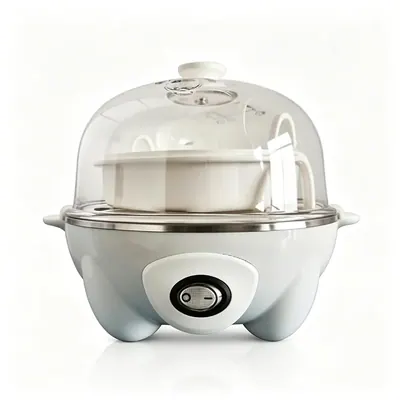
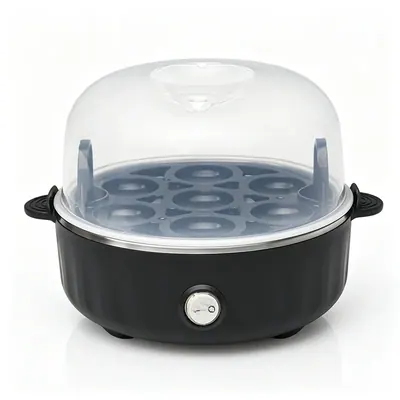
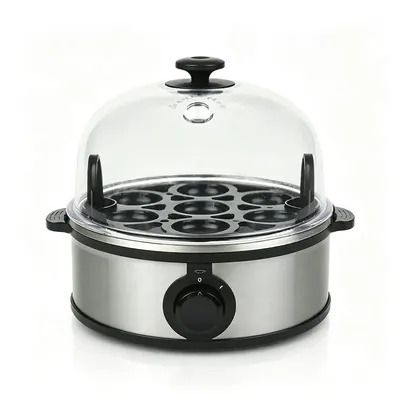
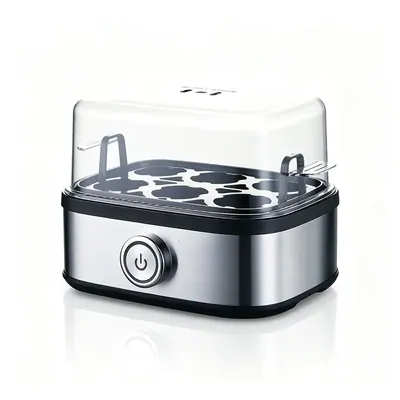
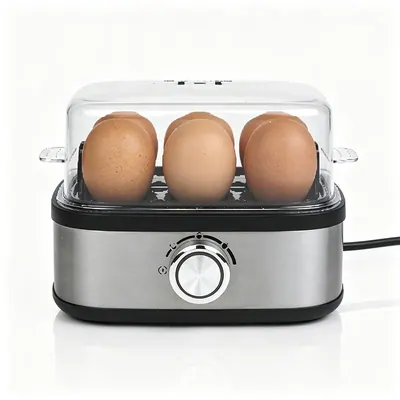
It is steam timing, not temperature control
An egg cooker boils a measured amount of water, and the steam cooks the eggs until the water is gone. The thermostat is only there to cut off when the plate runs dry. So the doneness is set by the water volume and the heat input, not by a sensor.
That makes the measuring cup the calibration device. A cup marked for soft, medium and hard, with a piercing pin for the shell, is what makes the product repeatable. A cooker sold without a marked cup is a cooker that produces a different egg every time.
Egg size and starting temperature change the result
A large egg from the fridge needs more steam than a medium egg from the counter. Since the cooker cannot measure the egg, the cup has to assume a size and a temperature, and the instructions have to say which. Most cups assume a medium egg at room temperature.
The practical answer for an OEM product is a cup with two scales — one for fridge eggs and one for room-temperature eggs — and a lid that holds the steam. That is cheap and it removes the biggest source of 'it doesn't work' reviews.
| Result | Water (typical) | Time (typical) | Note |
|---|---|---|---|
| Soft yolk | ~25 ml for 3 eggs | 5–6 min | Pierce the shell, start with room-temperature eggs |
| Medium | ~35 ml | 7–8 min | The default on most cups |
| Hard | ~50 ml | 10–12 min | Cool immediately to stop cooking |
| Poached | Tray + ~60 ml | 8–10 min | Needs a dedicated poaching tray |
| Steamed (custard) | ~40 ml | 10 min | Bowl accessory, different timing |
The plate, the tray and the piercing pin
The heating plate scales, and a scaled plate boils slower, so the egg is undercooked. A flat plate that can be descaled with a cloth, and a non-stick coating that survives it, is the durability story here.
The egg tray is usually plastic and the eggs sit in dimples. A tray that holds the eggs upright keeps the yolk centred, which is what makes a devilled egg possible. The piercing pin matters too: a pierced shell does not crack, because the air escapes instead of expanding.
What fails, and what to specify
The failures are the thermal cut-out (it is the only control), the plate (scale), and the lid (warping). A bimetallic cut-out with a defined trip point and a lid that is heat-stable are the two specifications to insist on.
The auto-off has a safety role: a cooker that boils dry and keeps heating will melt the tray. Since the whole cycle ends when the water is gone, the cut-out is the end-of-cycle detector and the safety device at once.
Market configuration at a glance
| Market | Voltage | Plug | What changes |
|---|---|---|---|
| EU / UK | 220–240 V | C / F, G | Food-contact declaration, WEEE, capacity often 6–7 eggs |
| North America | 110–120 V | A / B | Higher current; slower steam, so timings shift |
| Japan | 100 V | A | Re-rated element; smaller capacity |
| SE Asia | 220–240 V | C / G | Hard water; descaling access is essential |
Egg cooker questions buyers ask
Why is my soft egg sometimes hard?
Because the cooker times by water volume, and egg size and starting temperature change how much steam the egg needs. A cup marked for both fridge and room-temperature eggs removes most of the variation.
Does it need a thermostat?
It needs a cut-out, not a thermostat. The cycle ends when the water is gone, and the cut-out both detects that and protects the plate if it boils dry.
Why pierce the shell?
To let the air escape as it expands, which stops the shell cracking and keeps the white inside. The pin in the measuring cup exists for that reason.
What fails first?
The heating plate (scale), then the thermal cut-out, then the lid. A plate that can be descaled without tools and a cut-out with a defined trip point are the two things to specify.
Tell us the capacity and the market, and we will quote the measuring cup and the cut-out as separate items — they are the two parts that decide how repeatable the product is.
Need help choosing?
Send us the product type, target market and estimated volume — we will shortlist models and quote.