Convection Heater OEM & ODM
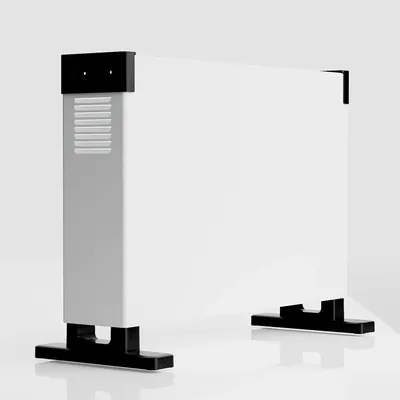
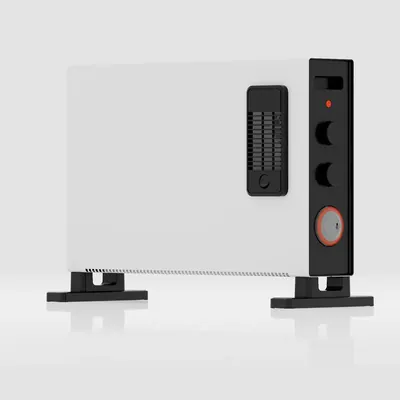
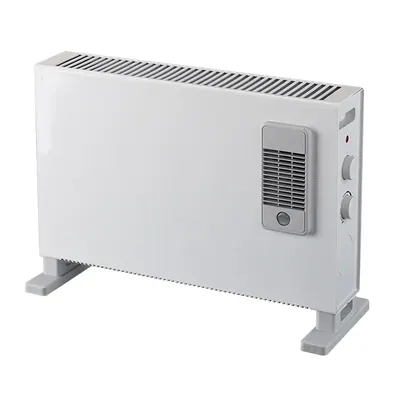
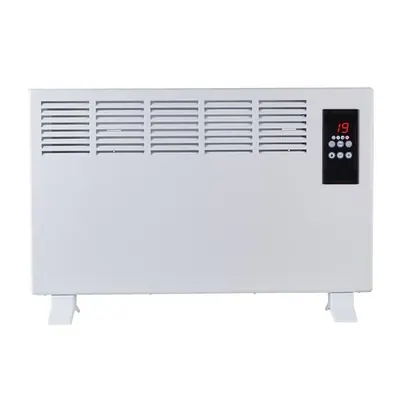
18 convection heater models, in panel, tower and freestanding formats. A convection heater is chosen for one reason above all others — it has no fan, so it is silent — and that single fact decides both what the product is good at and what it costs the customer in other ways.
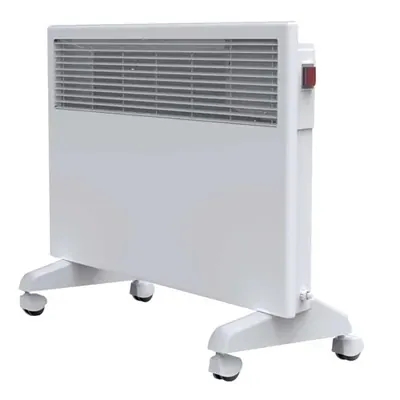
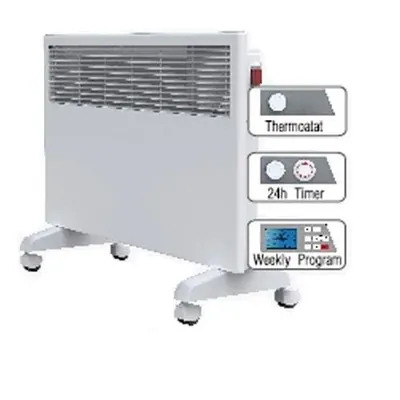
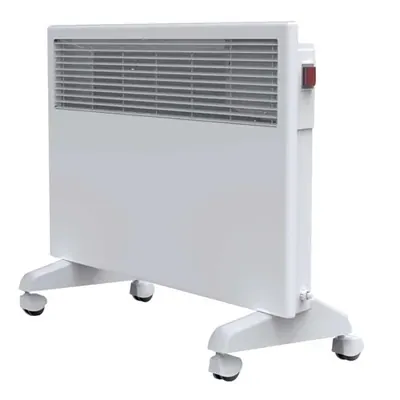
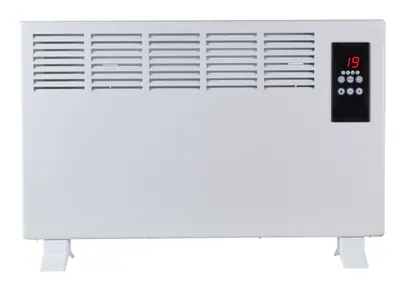
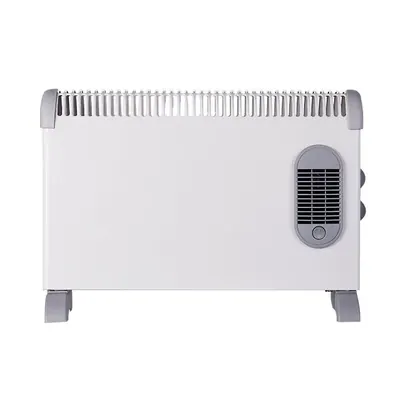
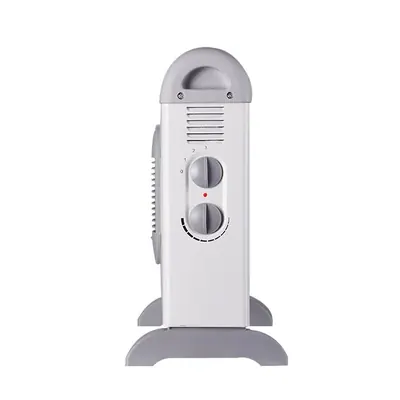
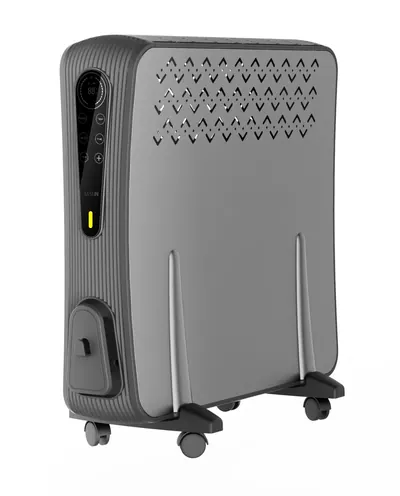
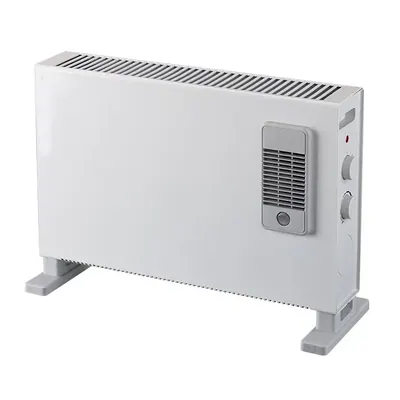
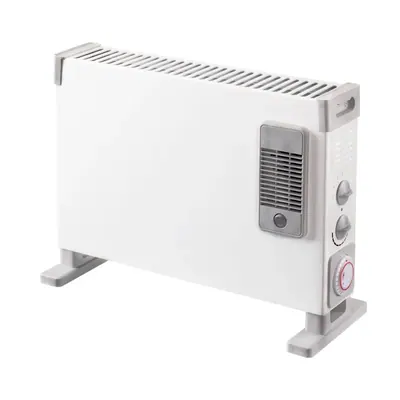
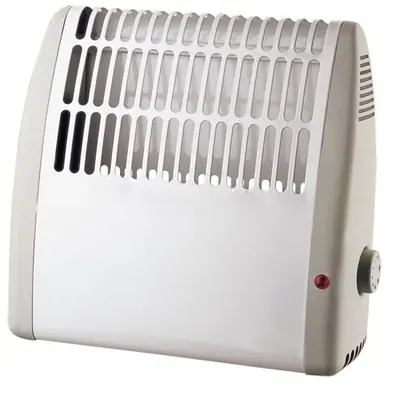
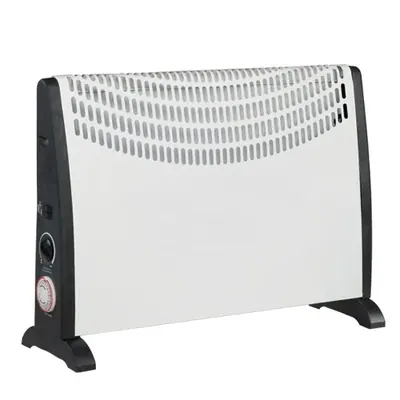
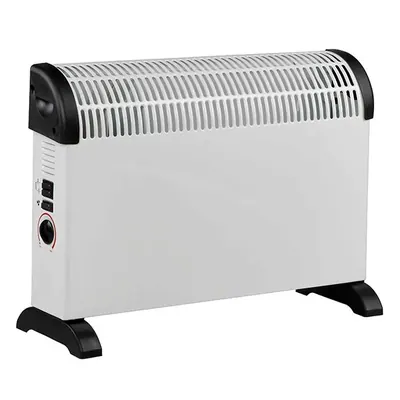
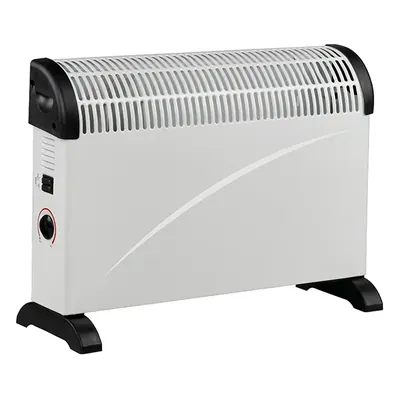
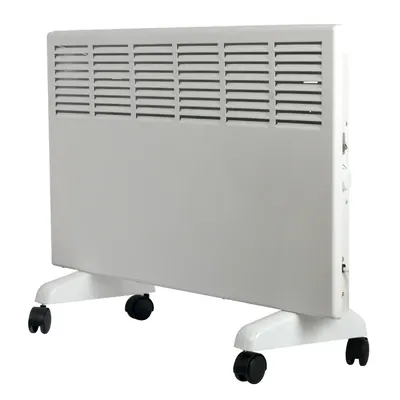
Silence is the product
A fan heater moves air with a fan, and the fan is what makes noise. A convection heater relies on air warming and rising across a heated element, which means there is nothing to hear. For a bedroom, a study or anywhere the occupant is trying to sleep or concentrate, that difference is the whole purchase decision.
It is worth stating plainly what the customer gives up for it. Convection warms a room more slowly, because it depends on the natural circulation of air rather than on pushing it. Heat also continues to arrive after the element switches off, and for a short while after switching off, which some users like and others do not expect.
The other consequence is that the housing runs hotter, because there is no airflow to carry the heat away from the surfaces. That is a design constraint rather than a fault, and it is why convection heaters carry more prominent safety requirements around surface temperature and guarding.
What a convection heater is and is not for
| Situation | Why convection suits it or does not |
|---|---|
| Bedroom, overnight | Silence matters more than speed. This is the category's strongest use case |
| Study or office | Continuous, quiet background heat suits the product; a room that is only occupied briefly does not |
| Bathroom | Not suited unless the product is rated for the location, because of water and surface temperature |
| Large or draughty room | Weak. Natural circulation struggles to keep up with air exchange, whatever the wattage |
| Heating one person rather than a room | Not suited. Directed radiant heat is a better match for that |
Being clear about this in a listing is more useful than a large wattage figure, because the customer who buys a convection heater expecting instant heat returns it.
Specification decisions that move the unit cost
| Decision | What it changes | Why it moves the price |
|---|---|---|
| Element | Wire element, PTC, or a conductive coating on a glass or metal panel | Surface temperature, how evenly the panel heats, and how much of the surface is safe to touch |
| Surface and housing | Metal panel, glass panel, or a finned body | Glass and coated panels change the appearance and the price band, and a finned body radiates more heat into the room |
| Thermostat | Mechanical dial, or an electronic control with a setpoint and a timer | A thermostat is what makes the appliance cycle rather than run constantly, and an electronic control adds a sensor and firmware |
| Power settings | Single, two, or several levels | Multiple levels allow a lower setting to be held overnight, which is what most buyers actually want |
| Format | Freestanding, wall-mounted panel, or tower | Format decides the moulding, the carton volume and whether the product needs a mounting kit |
| Safety | Tip-over switch, thermal cut-out, and guarded surfaces | Baseline in most markets, and the absence of a fan makes surface temperature harder to manage |
| Portability | Fixed, castors, or a carry handle | Castors add a fitting and change how the product is used between rooms |
Surface temperature, and why it is harder without a fan
In a fan heater, the moving air carries heat away from the housing and the surfaces stay comparatively cool. A convection heater has no such airflow, so the surfaces run closer to the element temperature, and the design has to manage that.
The practical measures are the element type, how the heat is distributed across the surface, and how the surfaces the user can reach are arranged. A PTC element is self-limiting as it heats, which helps; a glass panel spreads the heat across a larger area, which lowers the peak temperature at any one point but raises the average across the front.
This is a tooling decision and it interacts with the guarding. A product aimed at a household with children or pets has a different requirement from one aimed at an office, and stating the intended use at brief stage is what allows the surface to be specified for it.
Voltage, plug type and compliance by market
We do not pre-certify every SKU. Testing and certification are arranged for the specific model and the specific market you are ordering for, and quoted as their own line. Space heaters also carry energy labeling and ecodesign requirements in some markets, which are part of the same quotation.
| Market | Voltage and plug | What is usually required |
|---|---|---|
| European Union | 220–240V, CEE 7/7 (Schuko) | CE marking with test reports behind it, plus energy labeling and ecodesign conformity for local space heaters |
| United Kingdom | 230V, BS 1363 (Type G) | UKCA marking with the test reports and the equivalent energy label |
| North America | 110–120V, NEMA 1-15 or 5-15 | Listings that retailers accept, plus the safety requirements for a mains heating element and its surfaces |
| Australia and New Zealand | 230–240V, AS/NZS 3112 (Type I) | Electrical safety approval, and an energy rating label for some heater types |
| Middle East and Southeast Asia | 220–240V, plug type varies by country | Depends on the destination; conformity documents are frequently required at customs |
Branding, packaging and the seasonal order
A wall-mounted panel presents a large flat face, which makes it one of the easier products in the catalog to brand well: a printed or coated front, a choice of surface finishes, and a logo that sits naturally rather than being applied to a curved plastic housing.
Freestanding formats are more conventional, with pad printing or silk screen on the housing. Because these products are bulky and seasonal, carton volume is worth watching, and the ordering calendar matters as much as it does for any winter product — a late delivery has no second chance.
Packaging follows the channel: a color box with a photographic front for retail, a plain carton for marketplace shipping. Both are proofed before production and the artwork proof is free.
Convection heater questions buyers ask
Why choose a convection heater over a fan heater?
Silence. A convection heater has no fan, so there is nothing to hear, which is why it suits a bedroom or a study. What the customer gives up is speed: convection warms a room more slowly because it relies on natural circulation.
How large a room will it heat?
There is no honest single answer, because it depends on insulation, outside temperature and air exchange as much as on wattage. Natural circulation struggles in a large or draughty room. The reliable test is a sample in the room it is intended for.
Does the housing get hot?
Warmer than a fan heater's, because there is no airflow carrying heat away from the surfaces. That is a design constraint rather than a fault, and it is managed through the element type, the heat distribution across the surface and the guarding. The intended use should be stated at brief stage, because a household with children has a different requirement from an office.
What is the minimum order for a convection heater?
It is quoted per model, because it depends on the model and on how much of it is already tooled. Both the minimum order quantity and the lead time are stated on the quotation for the specific model you pick.
Do the heaters come with certification?
We do not claim blanket certification across the catalog. Certification and any energy labeling are arranged for the specific model and the specific market you are ordering for, and quoted as their own line.
Can we see a sample before ordering in bulk?
Yes. A production sample is produced and shipped before bulk production, and for a heater we recommend running it in the room it is intended for, because how quickly the room feels warm is the customer's real test.
If the heater you need is not in this list, send the specification — format, element type, power levels and controls — and we will tell you what is available.
Need help choosing?
Send us the product type, target market and estimated volume — we will shortlist models and quote.