Capsule Coffee Machine OEM & ODM
A capsule machine is sold on bar pressure, and the bar number on the box is the pump's maximum, not the pressure at the coffee. What decides whether the cup tastes right is the thermoblock, the flow restrictor and the piercing geometry — three parts that cost little and are the difference between a machine that is reviewed well and one that is returned.
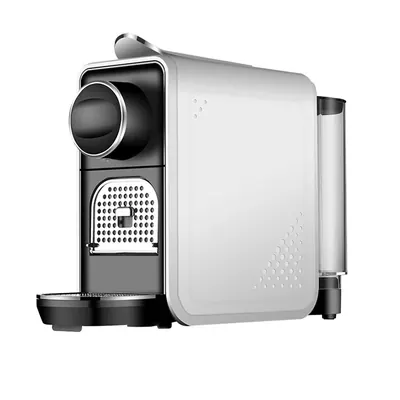
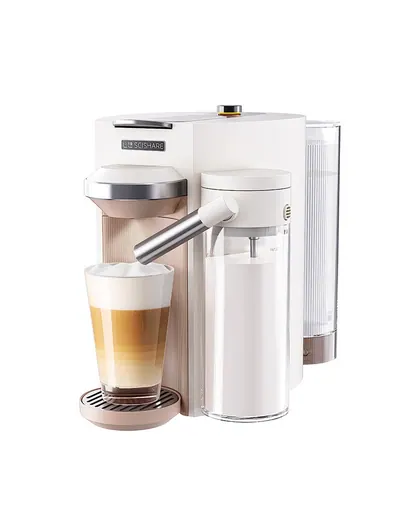
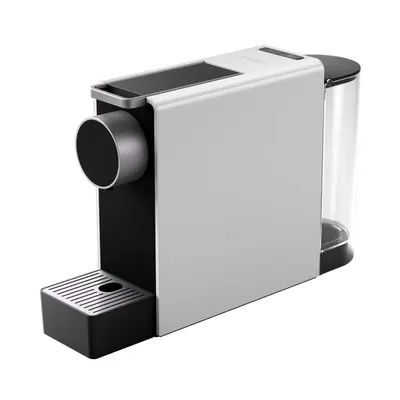
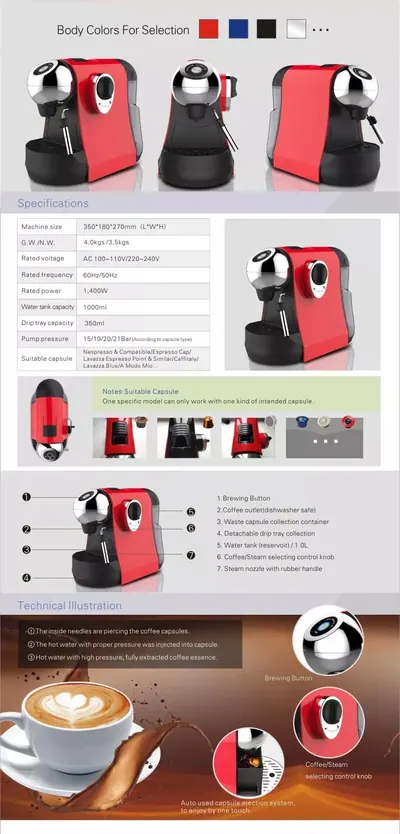
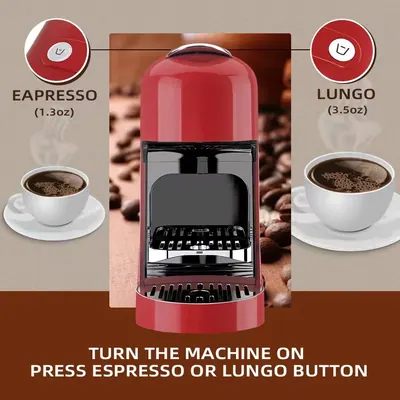
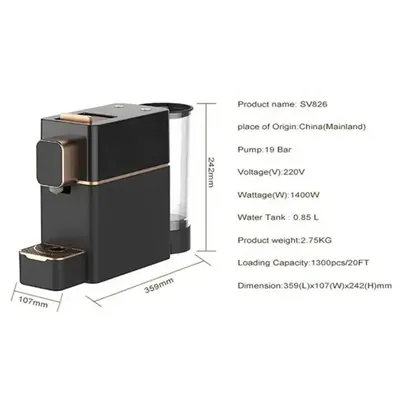

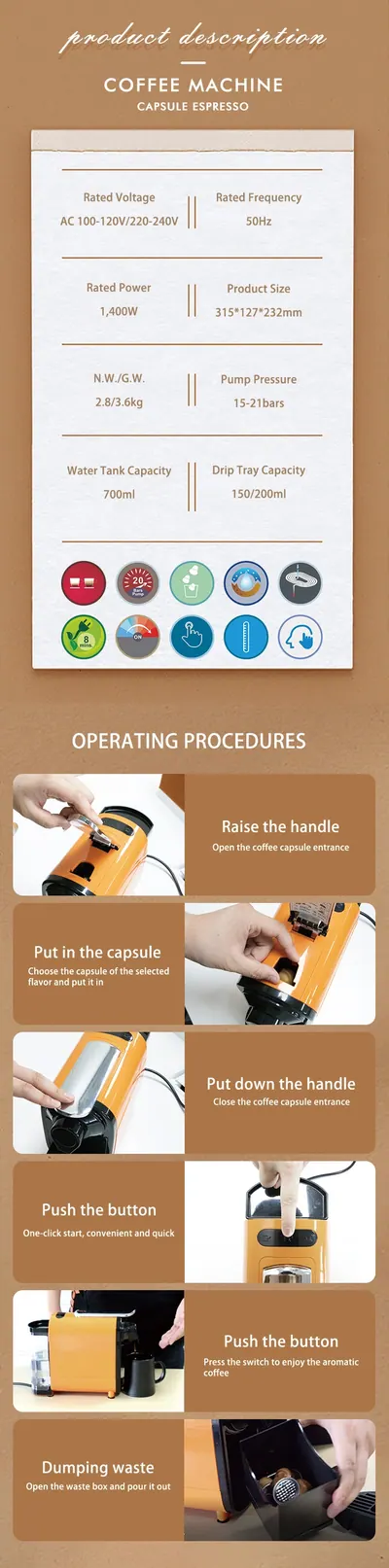
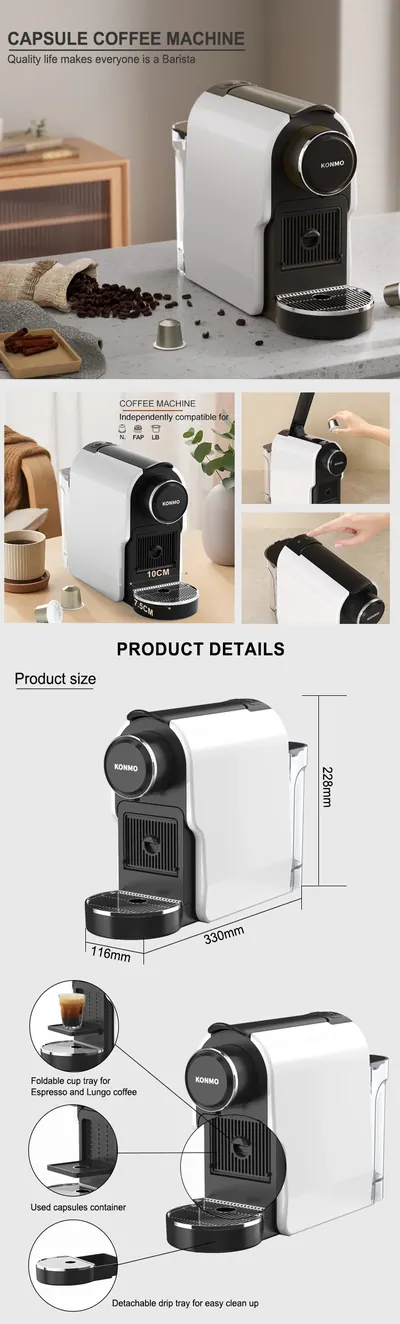
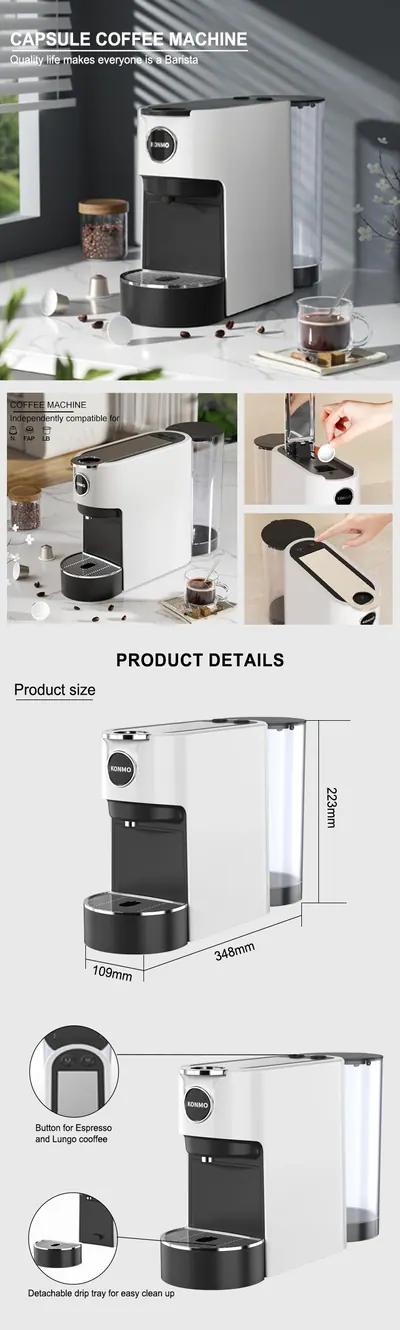
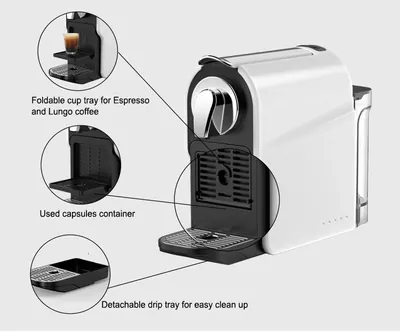
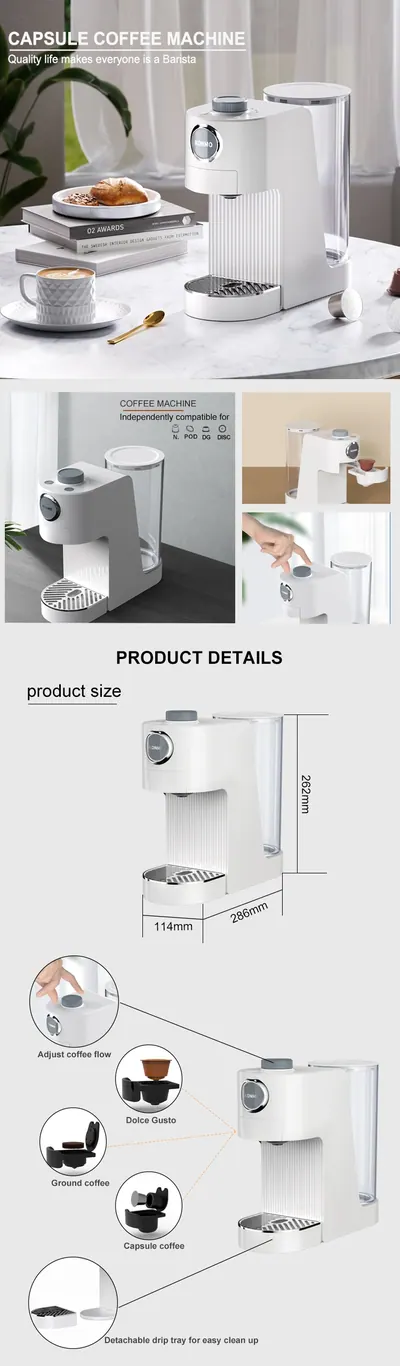
The 19 bar on the box is not the brewing pressure
Capsule machines quote the pump's stall pressure, typically 15 to 19 bar. The coffee itself is extracted at roughly 8 to 10 bar, because a flow restrictor or the capsule's own membrane drops the rest. The high pump figure exists so the machine can still reach working pressure as the capsule clogs and the flow falls.
That distinction matters when comparing suppliers. A machine with a 15 bar vibration pump and a well-matched restrictor can produce a better and more repeatable shot than a 19 bar unit with a restrictor chosen to match a different capsule. The number that predicts cup quality is flow rate through the capsule in millilitres per second, and almost nobody puts it on the box.
Thermoblock or boiler, and why the warm-up time is a design decision
A thermoblock heats water as it passes, which gets the machine ready in 25 to 30 seconds and keeps the housing compact. A small boiler holds a reservoir of hot water, which is more temperature-stable across a shot but takes two to three minutes to heat and makes the machine bigger and heavier.
For capsule machines the thermoblock wins on almost every axis except one: temperature stability during a long pour. A thermoblock's outlet temperature drops as flow increases, so on a lungo the last part of the shot is cooler than the first. That is why thermoblock machines specify the brew temperature for an espresso-size pour and let longer pours run a few degrees cooler.
| Heating | Warm-up | Temperature stability | Cost | Where it belongs |
|---|---|---|---|---|
| Thermoblock | 25–30 s | Good on short pours, drops on long ones | Low | Compact household machines |
| Small boiler | 2–3 min | Best across the whole shot | Higher | Premium and professional-adjacent machines |
| Thermoblock + PID | 30 s | Close to boiler performance | Middle | Mid and upper retail |
Capsule compatibility is a legal and a mechanical question
The piercing geometry — how many needles, at what angle, and how deep — defines which capsules the machine can use. A machine built for one capsule format will not reliably pierce another, even when the capsule physically fits, because the membrane thickness and the pierce point differ.
The commercial side is that the original capsule patents have expired in most markets, so third-party capsules are legal and abundant. A brand that wants to sell its own capsules needs the machine to be reliable with the third-party ones anyway, because customers will use them; a brand that wants to lock the machine to its own capsules needs an RFID or a barcode, which adds cost and is a known complaint point.
Standby, auto-off, and the regulation that catches exporters
Household coffee machines sold in the EU fall under standby and off-mode power rules, which set a maximum consumption when the machine is idle and generally require automatic power-down after a period of inactivity. A machine with a permanent clock and a lit display can fail that limit without anyone noticing until the customs or market-surveillance check.
The engineering answer is a control board that drops the heater and the display separately, and a design that does not keep a transformer energised for a clock nobody uses. It costs a few components and it is the difference between a compliant shipment and a rejected one.
Descaling, water hardness and the part that fails first
Scale is the main cause of premature failure in hard-water markets. A machine that descales properly has a removable tank with a wide mouth, a descaling cycle the customer can actually run, and a hardness setting that changes how often it asks. A machine without those turns hard water into a dead pump in a year.
The parts that scale attacks first are the thermoblock and the flow restrictor, because both have narrow passages. A replaceable restrictor cartridge, or a thermoblock with a cleanable inlet, is worth more to the return rate than any extra feature on the box.
Market configuration at a glance
| Market | Voltage | Plug | What changes in the specification |
|---|---|---|---|
| EU | 220–240 V | C / F | Standby power limit, energy and material declarations, descaling instruction in the local language |
| UK | 220–240 V | G | Same as EU plus the fused plug |
| North America | 110–120 V | A / B | Higher current for the same wattage, different thermoblock rating, UL-style marking |
| Japan | 100 V | A | Re-rated thermoblock and pump at the lower voltage |
| Australia / NZ | 230–240 V | I | Insulated pins, water-efficiency labeling for some channels |
Capsule machine questions buyers ask
Is a higher bar rating better?
Not by itself. The brewing pressure is set by the restrictor and the capsule, not by the pump's maximum. A 15 bar pump matched to the capsule gives a more repeatable shot than a 19 bar pump with a restrictor chosen for something else.
Thermoblock or boiler for a retail machine?
Thermoblock for a compact machine that must be ready in under 30 seconds. A boiler if the brand's claim is temperature stability across long pours, and if the size and the warm-up time are acceptable.
Can the machine use third-party capsules?
Usually yes, if the piercing geometry is right, and the original patents have expired in most markets. The machine has to be reliable with them anyway, because customers will try them regardless of what the brand prefers.
What should be measured on a sample?
Shot volume and time for each capsule size, brew temperature at the spout at the start and the end of the shot, and warm-up time from cold. Those four numbers explain most of what reviewers will write.
Send the capsule format, the target market and the cup sizes you intend to support, and we will tell you which pump and thermoblock combination meets it and what the tooling position is.
Need help choosing?
Send us the product type, target market and estimated volume — we will shortlist models and quote.