Air Circulator Fan OEM & ODM
An air circulator is not a fan with a different name: it is sold on how far the air still moves at the far end of the room. That throw distance comes from the duct, not the blade, and it is why a small circulator can move air across a room that a larger ordinary fan cannot reach.
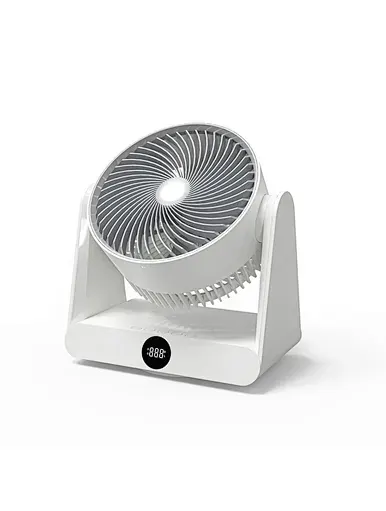
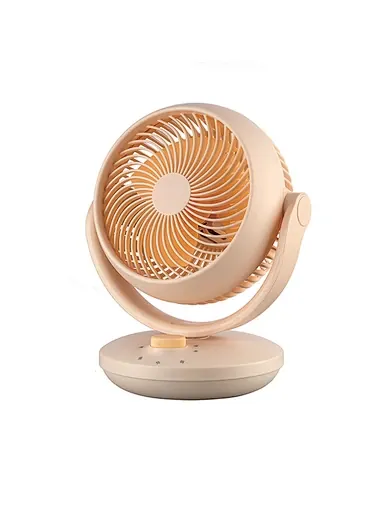
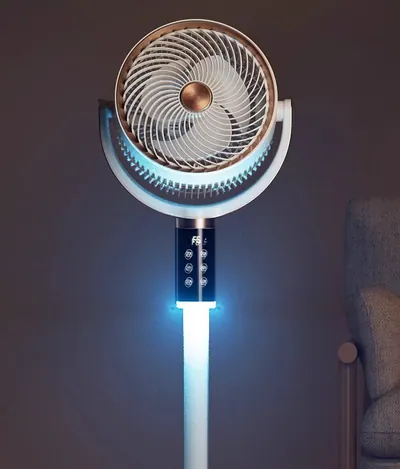

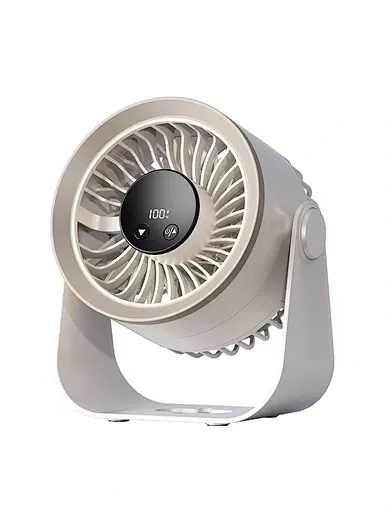
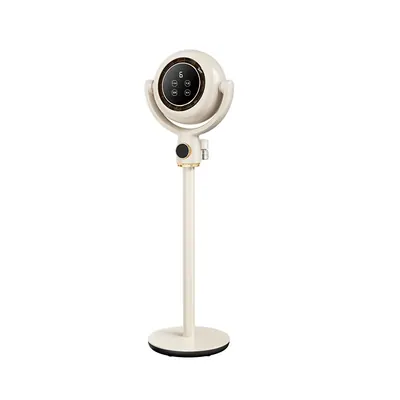
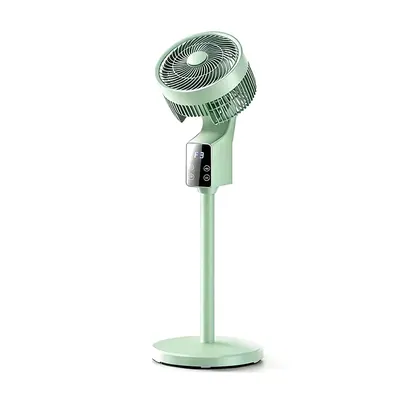
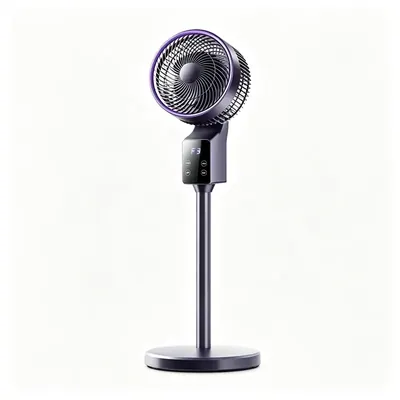
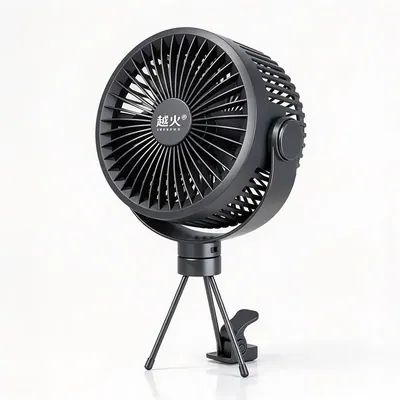
Throw distance is the specification, and it is a duct problem
A circulator aims a column of air across the room; a standard fan spreads it. The difference is the shape of the housing, which acts as a duct and keeps the airflow coherent for several meters instead of dissipating within one.
The number to ask for is the air speed at a stated distance — typically three to five meters — not at the grille. A fan that reads 4 m/s at the outlet but 0.3 m/s at three meters will not circulate a room, whatever the box says.
Why a circulator is usually paired with an air conditioner
An air conditioner cools the air around its own indoor unit; a room with a cold corner and a warm one is a mixing problem, not a capacity problem. A circulator that pushes the cold air across the ceiling and down the far wall evens the room out, and it lets the air conditioner be set a degree or two higher for the same comfort.
That use case drives the specification: a wide, slow-moving column is better than a narrow jet, and vertical oscillation matters more than horizontal, because the temperature difference in a room is mostly floor to ceiling.
DC motors are the reason these products exist
An AC motor at low speed hums and wastes power; a DC or BLDC motor runs quietly and efficiently across a wide speed range. Circulators are sold as quiet, always-on products, so the DC motor is not a premium extra — it is the enabling part.
The practical consequence is that a circulator's noise is dominated by the airflow, not the motor. A well-designed unit at low speed is close to inaudible in a bedroom, which is the whole point of leaving it running overnight.
Oscillation, angle and the parts that wear
A circulator needs to be aimed: a head that tilts and a body that oscillates. The tilt mechanism is a friction hinge that wears loose, and the oscillation gear is the same nylon-on-nylon wear point as in any fan. Both are cheap to build well and are the two things that go wrong after a year.
A tall stand version adds a third failure: the joint between the pole sections and the base weight. A circulator that tips over is a safety issue as well as a return.
Market configuration at a glance
| Market | Voltage | Plug | What changes |
|---|---|---|---|
| EU / UK | 220–240 V | C / F, G | Standby limit if remote or app-controlled, noise declaration, WEEE |
| North America | 110–120 V | A / B | Higher current; typically larger diameter units |
| Japan | 100 V | A | Re-rated motor; throw distance falls at the lower voltage |
| SE Asia / Middle East | 220–240 V | C / G | Higher ambient and dust; sealed motor wanted |
Air circulator questions buyers ask
How is a circulator different from a fan?
The housing acts as a duct and keeps the airflow coherent, so it still moves air three to five meters away. An ordinary fan spreads the air and loses speed within a meter, which is fine for cooling a person and useless for mixing a room.
Does it replace an air conditioner?
No, it makes one work better. By mixing the cold air an air conditioner produces, it evens out the room and lets the setpoint go a degree or two higher for the same comfort, which is where the savings come from.
Why do circulators use DC motors?
Because they are sold as quiet products that run for hours. A DC or BLDC motor is quiet and efficient across a wide speed range, where an AC motor hums and is inefficient at low speed.
What should be measured on a sample?
Air speed at one, three and five meters, noise at one meter on the lowest and highest settings, and the tilt hinge resistance after a few hundred cycles.
Send the room size and the distance the air has to travel, and we will tell you which duct and fan diameter reach it at an acceptable noise level.
Need help choosing?
Send us the product type, target market and estimated volume — we will shortlist models and quote.